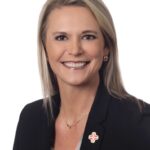
When Marjorie Evans was a girl, she dreamed of becoming a professional dancer. She took classes, practiced and performed in recitals, hoping to dance her way onto the stage one day. That childhood dream never came true but Evans did become, in a sense, a choreographer, directing and coordinating the activities of a company of professionals who work with special needs infants, children and young adults, helping them reach their potential and fulfill dreams of their own.
Evans is the founder and executive director of the Broward Childrens Center, a multifaceted non-profit agency that offers a full continuum of programs and services for infants, children and young adults from birth to age 21 who are medically fragile and physically or developmentally disabled. With 325 staff members, 10 separate facilities and 13 distinct programs serving over 1,000 children each year, BCC is a dynamic and thriving organization that is distinguished by a 37-year history of growth in response to emerging needs of children and families.
Located in Pompano, BCC was founded by Evans in 1971 and originally was conceived as an alternative to institutional care of children. Today, the organization provides medical, educational, therapeutic, recreation and advocacy services as well as residential care. According to Evans, the mission of BCC is to enhance the quality of life for special needs children in every way possible.
“We are committed to constant assessment of needs and that approach has enabled the growth and development of this organization,” says Evans. “The staff is sensitive to the needs of the kids and families, and always alert to new problems. Once we identify a need, we create a program to address it.”
As a result of this blend of vision and practicality, BCC now offers respite care, group homes, pre-schools, a skilled nursing facility through its affiliate CompCare, before and after-school programs, mobile medical care, home health care, medical transportation, physical/occupational/speech and language therapies and prescribed pediatric extended care, known as PPEC. Taken together, the programs meet the medical, educational and social needs of the children and recognize the stress and complexity of the family caring for a special needs child.
“Marge Evans leads by example,” says Thor Barraclough, executive director of the BCC Foundation. “She has a positive outlook and believes that anything is possible. She believes in giving the kids every choice and removing as many barriers and restrictions from their lives as possible. This philosophy resonates with our staff and motivates the entire organization; the result is a highly creative work environment where everyone pushes the envelope, as advocates, clinicians, teachers and therapists.”
Barraclough says that BCCs success is also the result of exceptional responsiveness to the experiences of children and families. “We look beyond the medical problems and see the whole child, their family and their community. We consider everything that a child needs in order to grow, flourish and have the best possible quality of life. That also means providing the family with the training and tools to manage the care of their child.”
BCC is a busy place and Evans says that the population of medically fragile children is growing because of advances in neonatal, pediatric and reproductive care and technology. With survival rates higher than ever, high-risk births have risen across the country and that means more medically fragile and developmentally challenged children. Evans says that BCC is caring for greater numbers of very fragile, technology-dependent children who require a highly skilled nursing care and may have parents who are, for a variety of reasons, unable to manage such demanding care.
Although BCC is focused now on medically fragile infants and children, it is also addressing the needs of healthy children who are uninsured and undocumented. Another emerging need is the population of ventilator-dependent, cognitively intact young adults who “age out” of the pediatric system and need to live in an environment that can meet their complex, special needs.
Evans, the aspiring dancer who became involved with special needs children as a volunteer, now has a masters degree in counseling and no regrets about the career she ended up having. “It means so much to me to get to work with the children and with this staff of very talented people. They motivate and teach me. Our goal is always to get the kids home, whether that means the family home or a group home. We want to help the kids become as independent as possible and to have the best quality of life.”



 When Marjorie Evans was a girl, she dreamed of becoming a professional dancer. She took classes, practiced and performed in recitals, hoping to dance her way onto the stage one day. That childhood dream never came true but Evans did become, in a sense, a choreographer, directing and coordinating the activities of a company of professionals who work with special needs infants, children and young adults, helping them reach their potential and fulfill dreams of their own.