Imagine a world without volunteers. It’s almost impossible to do, especially in places like hospitals and health care facilities where these individuals who give of their time and talents are absolutely instrumental in helping organizations function.
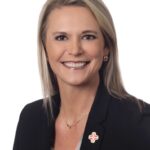
“I am in awe of them; they make such an impact in the hospital where I work, and my job is made so much more enjoyable because of the fact that I get to work with these amazing angels in blue jackets every day,” said Aimee Yahn-Carmichael, DBA (ABD), MAA, CDVS, director of volunteer services at Boca Raton Regional Hospital.
“We are very fortunate to have a very large volunteer pool; we have 1,000-plus members in our auxiliary, and have 600 people volunteering their time in 120 different areas of our hospital every week,” she continued, adding that the volunteers are part of the Debbie-Rand Memorial Service League, which is the auxiliary to the Boca Raton Regional Hospital. “These individuals are highly focused on quality service and patient care, and they are instrumental to our mission.”
Because volunteers are so important, health care facilities are making it a priority to find ways to recruit and retain this work force. “Between the economic pressures facing the industry and heightened public expectations, it has definitely increased the need for this type of assistance,” said Yahn-Carmichael, who also serves as the president-elect of the Florida Association of Directors of Volunteer Services (FADVS).
Unfortunately, volunteers are getting harder to come by. According to Yahn-Carmichael, the U.S. Bureau of Labor Statistics noted a decline in the number of people volunteering in 2011, 2012 and 2013, and that number remained flat in 2014 and 2015. “Recruiting volunteers today requires a better understanding of their functional motives; understanding why they chose to volunteer and working with them to fulfill those needs,” she explained.
One of the biggest challenges facing recruiters is that they are now working with individuals from four different generations. “Never before have we had so many different generations volunteering at the same time, and each has its own unique needs and wants,” said Yahn-Carmichael. “One size does not fit all and each generation brings its own challenges.”
She gives the example of the ‘silent generation’ or the oldest volunteers, who, since they are now retiring later in life than they used to, have less time to volunteer. Baby Boomers and Generation X members are busier than ever, and want more flexibility in terms of volunteering, and Generation Y members are not as focused on volunteering as past generations have been.
“In years past, we scheduled by shifts, but that’s not working for our Gen X volunteers, who also want more virtual-based opportunities,” said Yahn-Carmichael. “Generation Y, which is just entering the work force, is looking for learning opportunities, and we need to accommodate that. This is different from the needs of the silent generation, who are volunteering oftentimes for the social opportunity that it provides.”
Communicating with the various groups is different, too, with the younger generation preferring to receive messages by text or email, compared to reaching the older generation through the mail.
“We’re doing a lot to reach out to the younger generation, including working with schools and universities, and providing scholarships,” said Yahn-Carmichael, adding that the association has a very robust teen program. “We want to get people volunteering when they are young, because they are very much the future. That said, we still love our silent generation; they are a very dedicated group of individuals.”
Yahn-Carmichael encourages anyone who works with volunteers to consider joining the Florida Association of Directors of Volunteer Services to take advantage of the resources available. “It’s an excellent opportunity to network, and to reach out with questions,” she said.