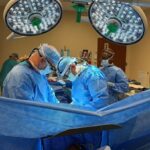
.jpg) According to Mike Tebor, cleaning ductwork in hospitals is a "duct cleaner’s worst-case scenario." A comment like that could stop you in your tracks, but when you realize what he’s talking about, you can understand his point. Tebor is one of the owners of Air Duct Aseptics, a company of indoor air quality experts who specialize in cleaning HVAC and AC systems.
According to Mike Tebor, cleaning ductwork in hospitals is a "duct cleaner’s worst-case scenario." A comment like that could stop you in your tracks, but when you realize what he’s talking about, you can understand his point. Tebor is one of the owners of Air Duct Aseptics, a company of indoor air quality experts who specialize in cleaning HVAC and AC systems.
The service is paramount to ensure healthy, clean, indoor air – hence his comment about hospitals. "They are the worst-case scenario in the world of air duct cleaning because you have a building that’s occupied 24 hours a day with ill patients. There are particulates and possible molds found in ductwork, and some of these molds can cause serious health effects." He mentioned a particular mold called aspergillus, which, depending on the species, if one spore would get into bone marrow for transplants, could be fatal to a patient.
Tebor knows all about the dangers of mold and dirty ductwork and unclean air. He has been in the air duct cleaning business for more than 25 years, and has taken care of more than 70,000 residences and businesses throughout Florida. In addition, he is ASCS certified with the National Air Duct Cleaners Association. Included in the Association’s 32-page guide are standards on how to clean various materials found in duct systems – fiberglass, sheet metal, etc. – and how one must be able to remove the debris without damaging the inside of the ducts.
However, he added that there’s more to his work than just cleaning: what is cleaned out also has to be contained. "Whatever is found in an HVAC duct system is very small in size. It’s so small that it had to be airborne to get in there in the first place. So cleaning is number one, and number two is containing the contamination we’ve removed. HEPA filters are used for containment on all cleaning equipment. We don’t want to pollute the indoor air during the cleaning process, we don’t want to throw millions of times more debris into the air. Our objective is to remove particulates and micro-organisms from the building."
How often this cleaning must be done depends on several factors. As Tebor said, air conditioners should be inspected and cleaned on an annual basis, but there is no standard for when a duct system should be cleaned because many things influence it. For example, is the facility using highly efficient filters, and are they changing them as often as they should? Do the filters fit properly? Are people smoking? Is there an outdoor air intake, and where is the outdoor air being drawn from? Is there carpeting? Carpeting is dirty and has a greater impact on air compared with stone or wooden floors. All of those factors, plus others, could determine how often ductwork should be cleaned.
As for the process itself, cleaning a house could take a day, but working in a hospital could take anywhere from three to 10 days per air conditioning system. One of the challenges, of course, is protecting the patients. Tebor explained, "At times, engineering controls are put in place that can allow us to clean the air conditioner without causing any ill-effect of the indoor air quality in patient areas. At other times, in critical areas, we will interface with the hospitals to shut down portions of the buildings and relocate those patients for periods of time during the cleaning."
In contrast to the duct systems, Tebor said the money and effort medical facilities put into floors is almost laughable. "We see dirty ventilation systems in hospitals, but just like everywhere else – out of sight, out of mind. Hospitals put millions of dollars into cleaning the floors, but they are under our feet. They’re not even in the breathing zone. But when it comes to their air ducts and their air conditioning systems, many facilities don’t have them cleaned for many years; but they are in the breathing zone, and that’s where mold can grow."
Tebor is a licensed Mold Assessor and Certified Indoor Environmentalist, which makes him multi-disciplined. "We have the resources that allow me to go in and clean your air conditioning unit, and if it’s uncleanable we can replace it. As an air duct cleaner, we can clean your duct to industry standards and have it like new; and as a licensed Mold Assessor, I can work inside and outside your air conditioner, for mold."
While removing mold is Tebor’s specialty, he emphasizes that not all mold is bad. "We’ve got to have mold. If we didn’t have mold we would not be alive, as falling leaves would be a thousand miles high because mold is what helps to decompose them and break them down. We need it for that. It’s great for making beer, penicillin, and saving lives. But it’s not good to breathe."