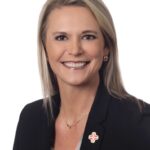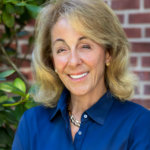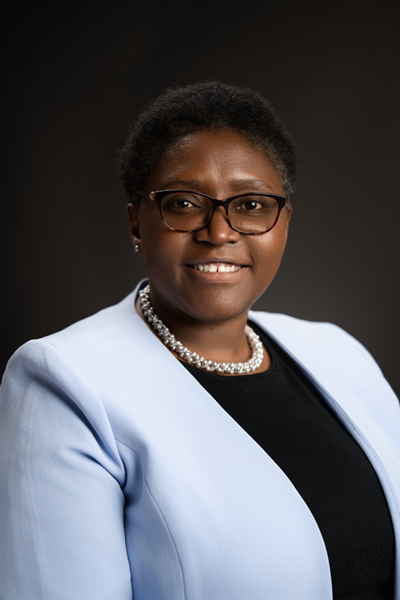


Dr. Adejoke Bolanle Ayoola
By Daniel Casciato
When Adejoke Bolanle Ayoola, Ph.D., steps into her new role as dean of Palm Beach Atlantic University’s School of Nursing on July 1, she will bring more than two decades of experience in nursing education, research, public health and academic leadership. But what draws her to PBA is more than the next step in an accomplished career.
For Dr. Ayoola, the opportunity is rooted in calling.
“I was drawn to Palm Beach Atlantic University for many reasons, including its mission to equip students to grow in wisdom, lead with conviction and serve God boldly,” Dr. Ayoola says. “Those are my own values as a Christian.”
That connection between faith and professional formation is central to how she views nursing education. To Dr. Ayoola, nursing is not simply a technical discipline or a pathway to employment. It is a vocation grounded in service, compassion, and a commitment to the whole person.
“As health professionals, and especially as nurses, this is what we have been called to do,” she says. “My passion is training the next generation of nurses and equipping them to be the best nurses God wants them to be.”
Dr. Ayoola comes to PBA after 19 years at Calvin University in Grand Rapids, Michigan, where she served in progressive leadership roles, including inaugural dean of the School of Health. In that position, she oversaw 21 undergraduate and graduate programs across nursing, pre-medicine and public health, while helping advance academic quality, program growth and interdisciplinary collaboration.
At PBA, she sees an opportunity to build on an already strong foundation.
“We have a very strong nursing program,” she says. “I look forward to supporting faculty and staff to further strengthen it and to building more programs based on identified needs.”
One of her first priorities will be assessing the School of Nursing’s existing strengths while exploring where additional growth may be needed. PBA offers nursing programs across multiple levels, including a Bachelor of Science in Nursing, an accelerated option for registered nurses, Master of Science in Nursing with different track options, and Doctor of Nursing Practice specializations.
Program growth is closely tied to the realities facing the health care workforce, according to Dr. Ayoola. Nursing shortages, burnout, and increasing patient complexity continue to challenge hospitals and health systems nationwide. Nursing schools, she believes, must play an active role in creating stronger pathways into the profession.
“How can we create pipelines from high school and work with hospitals?” she says. “That is something I am very passionate about: creating a pipeline that helps us continue to prepare excellent nurses who will be able to serve the next generation.”
Dr. Ayoola plans to spend her first months listening, learning and building relationships across the region. Her public health background will inform much of that work. She has experience in community-based participatory research and has long valued the role of academic-practice partnerships in preparing nurses for real-world care environments.
“As a public health nurse, part of my background involves being out in the community and partnering with hospitals,” she says. “I look forward to connecting with local agencies in South Florida and across Florida. How can we build strong academic-practice partnerships? That will help us prepare excellent nurses.”
Dr. Ayoola also brings a global perspective to the role. She earned her bachelor’s and master’s degrees in nursing from Obafemi Awolowo University in Nigeria before earning her Ph.D. from Michigan State University. Her international background reinforces her belief that today’s nurses must be prepared to care for people from diverse cultures, communities and life experiences.
“The world is a global village,” she says. “We need to prepare nurses who are able to serve people from diverse backgrounds and people with complex health challenges.”
That preparation, in her view, must extend beyond clinical competency. It also must include resilience, well-being, ethical leadership and the ability to work across disciplines. At PBA, she sees opportunities for nursing students to learn alongside students and faculty in pharmacy, ministry and other health-related programs.
“It is important for nurses to work in teams,” Dr. Ayoola says. “Team-based care is very important, and holistic care is important; caring for the physical, spiritual, emotional, psychological, and social needs of the person.”
The integration of faith and learning is especially important to Dr. Ayoola as students prepare for the emotional and spiritual demands of nursing. She believes Christian nursing education can help students see their work as a form of service and develop the resilience needed for a challenging profession.
“Christian faith provides a strong foundation for compassionate care because Christ himself was compassionate,” she says. “Teaching students from that perspective, that nursing is a calling and an opportunity to be the hands and feet of Christ, is very important.”
Dr. Ayoola has also been involved in national conversations about promoting well-being in nursing education. She believes students should begin learning those skills early, not after they are already overwhelmed by the pressures of clinical practice.
“We need to start from day one, equipping students with skills that build resilience and promote well-being,” she says. “Building resilience and promoting well-being is not a one-time thing. It’s lifelong.”
As health care evolves, Dr. Ayoola also expects digital tools and artificial intelligence to play an increasing role in nursing education and patient care. She is interested in exploring how PBA can further prepare students to use emerging technologies responsibly and effectively.
“We are in this digital age with AI, and that is a big discussion,” she says. “I look forward to exploring that with faculty, staff and our community to see how we can make the best use of it to support patient care.”
Dr. Ayoola’s arrival marks a new chapter for the School of Nursing as Dean Kimberly Fenstermacher prepares for retirement this year. For Dr. Ayoola, it is an opportunity to invest deeply in students, faculty, and the broader health care community.
“At PBA, we have an opportunity to prepare nurses who combine clinical excellence, compassionate Christian service, and innovative thinking,” she says. “By working collaboratively with health care organizations and community partners, we can make a meaningful impact on the health and well-being of the communities our students will serve here in the US and abroad.”
Her goal is clear: help prepare nurses who are clinically strong, spiritually grounded, compassionate, and ready to lead.
“This is quite appealing to me at this stage of my career,” she says. “I feel like this would be a good place for me to put my energy for the next decade.”
For more information, visit pba.edu.