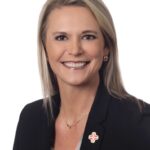
By Claudia Mason, MD
Palm Beach County Medical Society recognizes a physician’s worth.
We understand the business case to maintain a physically, emotionally and morally healthy physician population in South Florida. It has been well documented by the AMA the level of burnout, moral distress, and physical tolls taken on physicians that ever-increasing work demands without adequate support create. The New York Times’ opinion piece authored by Dr. Danielle Ofri was titled “The Business of Health Care Depends on Exploiting Doctors and Nurses.” She goes on to state that the integrity of healthcare workers to put their patients first seems to administrators, like everything is going well as the work gets done. The cost is burnout, turnover, and increased suicide for the physician. It means lost revenue, recruitment costs, and costs to ramp up of a new practice of approximately $1M per provider for the organization. If the loss is one of a specialized proceduralist the cost may be much higher. Hidden costs are those of loss of organizational prestige, reputation, and patient base. The Mayo Clinic estimates that for every point lower on a five-point physician satisfaction scale the provider is 30-50% more likely to leave.
We blame the EMR. We blame administrative tasks that are better done by support staff that have been pushed to physicians. The EMR is a fine tool for collecting data, and physicians and clinical staff have turned into data entry clerks. Documentation “must haves” rule for collection of quality data metrics that drive compensation. Adding extra support staff to do these tasks comes with the penalty of increases in productivity quotas.
We blame loss of autonomy. Many physicians follow a model as an employed physician. While they may have benefits of mobility and compensation, autonomy in managing workflow and productivity is lost. The administrative burdens of prior authorizations, phone calls, patient messaging, as well as the compliance learning modules, are expected to be done “in between” patients. Private practice physicians suffer from increasing costs and lowering reimbursements. The variable under their control is volume or charging for patient access. Physician extenders, advance practice nurses soon gain their own panels of patients and are in the same situation. Moral distress of not being able to do what is right for the patient when competing interests ensues. This becomes a time/money conundrum. Our sense of purpose is diminished.
How can it be that physicians flock to do “mission” work? We are treating throngs of patients for the sheer joy of practicing medicine. We get no compensation, there is minimal to no paperwork, just taking care of people and feeling fulfilled. Here is a clue to managing the crushing administrative workload we face, by creating systems that encourage practice of medicine instead of data entry. Burnout is a scourge of the profession, a danger to patients and society at large, and robs individuals of their vitality. Suicide rates among physicians are higher than the average even while adjusting for hours worked.
Organizations with vision use physician wellness and wellbeing as critical elements for planning operations, workflows and a metric for C suite balanced scorecards. Most organizations have realized this is an issue of maintaining a limited resource. Their efforts are in the nascent stage. The Florida Department of Health’s 2021 workforce report shows that 60% of Florida physicians are over age 50. Survey data shows 92% of younger physicians felt work life balance was a necessity.
How will we cope? We know what works. Reduction of administrative burden. Physician to physician interventions to prevent “Second Victim” trauma. Returning voice to physicians to manage their workloads. Return of the Doctor’s lounge where the organization recognizes the physical and emotional strains of practice and provides nourishment for the body and a safe place for nourishment of the soul.
The Palm Beach County Medical Society recognizes a physician’s worth.
In 2017, following a successful model from Washington State, they began a Physician Wellness Program to bring this to the attention of our members and the medical community at large. Under the leadership of Dr. Stefan Pasternack and his generosity, the Society raised funds to provide resource material available to members on the PBCMS website. Additionally, the PBCMS has held a formal educational Wellness Conference to educate our members and the healthcare community. Our proudest accomplishment has been for the Society to partner with vetted mental healthcare professionals to provide confidential free of charge counseling for five sessions. The Committee, headed by Dr. Shawn Baca, strives to advocate for physicians’ mental and physical health. To date the program has directly served practicing physicians, residents and medical students. Although organizations may have an assistance program, many physicians will not access that service through an employer. The PBCMS and the FMA actively advocate for changes in the licensing process to eliminate the question “Have you ever seen a mental health provider?”
We advocate for physicians to do what they were trained to do. Practice Medicine.
We call upon the South Florida healthcare community to understand a physician’s worth. The business case, moral case and ethical case is clear. Preserve the ability of physicians to practice medicine or be at the peril of losing this critical limited resource.
Dr. Claudia Mason is President of the Palm Beach County Medical Society.