


By Daniel Casciato
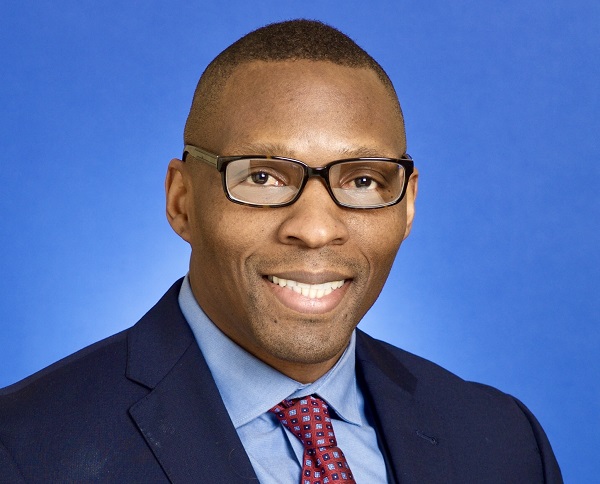
As healthcare education continues to evolve, South University is among the leaders in higher education preparing future professionals to meet the needs of an ever-changing healthcare landscape. In an insightful conversation, Gil Singletary, Ph.D., JD, MBA, MSW, Provost and Vice Chancellor of Academic Affairs at South University, shared his perspective on key trends in healthcare education and how the university is adapting to the demands of 2025 and beyond.
Adapting to the Post-Pandemic Landscape
According to Dr. Singletary, one of the most significant changes in healthcare education has been the aftermath of COVID-19, which has created an increased interest in healthcare professions and a corresponding wave of burnout and attrition. “We’re seeing an increase in those wanting to enter the nursing profession,” Dr. Singletary explains, “but we’re also seeing many healthcare professionals leaving the field.”
To address this challenge, South University is revolutionizing its curriculum, making it more responsive to the needs of the healthcare community while preparing students for the real-world challenges they will face. “We’re not only looking at what students need academically but also ensuring that our programs align with the realities of the profession,” he says.
The Shift from Traditional to Non-Traditional Students
One key trend shaping healthcare education is the shift from traditional 18- to 23-year-old students to non-traditional students. Dr. Singletary notes that more students today are seeking second careers or juggling full-time jobs and family responsibilities. “The non-traditional student is becoming the new traditional,” he says.
This shift requires South University to rethink how it delivers education. With students balancing multiple commitments, the university has adapted its curriculum to use multiple types of devices and platforms. “Students might be at a soccer game or waiting in the car line, so we need to ensure our delivery methods meet their needs,” Dr. Singletary emphasizes.
Mental Health and Non-Academic Challenges
In addition to academic challenges, students today are grappling with mental health issues that can significantly impact their performance in the classroom. Dr. Singletary explains that many students face non-cognitive challenges that affect their ability to succeed. “We’re seeing that external factors, such as mental health, can have just as much or more of an impact on student performance as academic ones.”
In response, South University has made mental health support a key focus, offering resources and services to help students navigate these challenges and thrive in their educational journey.
Integrating Technology and Simulation into Healthcare Programs
As healthcare evolves, technology is increasingly important in training future professionals. Dr. Singletary shares that South University is heavily investing in advanced simulation equipment to provide students with hands-on experience that closely mimics real-world medical scenarios. “We’re using high-fidelity simulation technology that can replicate everything from childbirth to diverse patient interactions,” he adds.
The university is also exploring using artificial intelligence (AI) to enhance learning, particularly in research, writing, and classroom engagement. “AI can answer basic questions and help students with assignments, allowing professors to focus on more in-depth learning,” Dr. Singletary says. However, the university is committed to maintaining academic integrity by implementing strict guidelines around AI usage to prevent issues like plagiarism.
Fostering Interprofessional Collaboration
One of the hallmarks of South University’s approach to healthcare education is its commitment to interprofessional education (IPE). “In healthcare settings, professionals don’t work in isolation—they work as part of a team,” Dr. Singletary notes. To prepare students for this reality, the university holds quarterly IPE events where students from different healthcare disciplines come together to tackle complex case studies from multiple perspectives.
“These events allow students to engage with their peers from other professions, like pharmacy or mental health counseling, and learn how to collaborate effectively,” he says.
This approach ensures that South University graduates are well-trained in their specific fields and equipped to work as part of a larger healthcare team.
Addressing the Need for Healthcare Professionals in Underserved Areas
South University is also committed to addressing the growing need for healthcare professionals in underserved areas, particularly in rural parts of Florida. “We’re an open-access institution, and we believe education should be available to all students, regardless of their background,” says Dr. Singletary.
The university actively recruits students across the US including rural areas and encourages them to complete practicums and internships in underserved communities. In addition to providing grants to help students from all areas, South University has partnered with historically black colleges and universities (HBCUs) to offer scholarships in fields like pharmacy.
Leading Innovation in Healthcare Education by 2025
Looking ahead to 2025, Dr. Singletary expresses South University’s commitment to being a trailblazer in healthcare education. “We strive to be a leader in using innovation and technology to advance our students and impact the communities we serve,” he says.
The university’s expansion plans to expand program offerings through online and hybrid classes include growing its reach beyond the Southeast to meet the increasing demand for healthcare professionals.
“We don’t grow just for the sake of growth. We grow to meet the needs of the communities we serve,” Dr. Singletary explains.
Conclusion
As South University looks to the future, its focus on innovation, technology, and community impact, positions it as a leader in healthcare education. Whether through advanced simulation technology, interprofessional collaboration, or its commitment to serving underserved areas, the university is well-equipped to meet the demands of 2025 and beyond.
As Dr. Singletary sums up, “Quality is at the heart of everything we do. When you see a South University graduate, you can feel confident they’re prepared to provide the highest level of care.”
For more information, visit southuniversity.edu.






















