By Carol Newman
Neurologic deficits and events alter the course of an individual’s life, robbing an otherwise healthy person of strength, mental acuity and overall well-being. This often disrupts families and impacts more than just the patient themselves. Broward Health’s comprehensive neuroscience program aims to improve short-and long-term outcomes for patients with preventive care, disease treatment and rehabilitation.
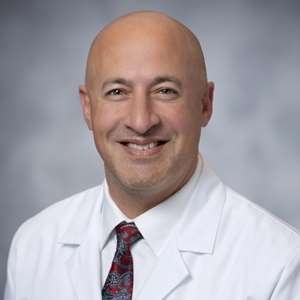
Dr. Shaye Moskowitz
“Broward Health is evolving our neurology and neurosciences program,” said Shaye Moskowitz, M.D., neurosciences medical director at Broward Health. “From our participation in clinical trials to our use of innovative technology and techniques, we’re committed to advancing treatment and ensuring patients receive the best possible care.”
Advanced Surgical Precision
Neurosurgeons at Broward Health treat a range of pathologies involving the brain and spine, including skull base tumors. These tumors grow from the bone of the skull base in various locations and may be benign or malignant, intra-axial or extra-axial (or both). Types of skull base tumors that may benefit from a surgical approach include:
- Chondrosarcomas
- Meningiomas
- Pituitary adenomas
- Vestibular schwannomas
“The basic premise behind skull base surgery is to design an ideal approach to cranial pathologies — typically tumors — that is the most effective and safe way to access and remove that pathology,” said Daniel Klinger, M.D., FAANS, fellowship-trained skull base neurosurgeon at Broward Health.
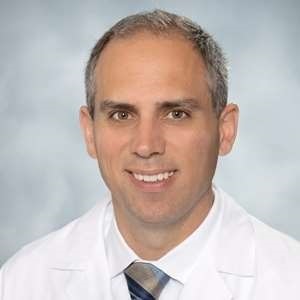
Dr. Daniel Klinger
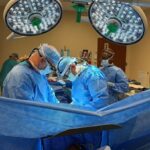
These advanced approaches include posterior, lateral and anterior craniotomies that serve to reach deep-seated tumors. Broward Health neurosurgeons often complete these procedures in conjunction with otologists and ENT sinus surgeons who have specialized training in middle-and inner ear and transnasal surgery. This team approach improves patient satisfaction.
It also enhances outcomes in meaningful ways, including:
- Hearing preservation
- Improved surgical cosmesis
- Faster recovery and return to daily life and routine
- Greater extent of surgical resection
- Minimized surgical morbidity in regard to brain injury and cranial nerve injury
Such improvements are only possible due to new techniques. “Previously, complete resection of every skull base tumor was the goal,” Dr. Klinger said. “We’ve now learned that many benign tumors do not require overly aggressive approaches. We have better, safer approaches to these tumors surgically. The end result successfully addresses the disease process while maintaining a high level quality of life.”
Catheter-Based Interventions
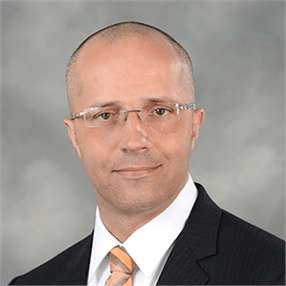
Dr. Celso Agner
Endovascular advances have resulted in significant changes compared to the surgical approaches depended on 20 years ago to treat stroke and aneurysm. “We’re advancing constantly, as new technologies are introduced day by day,” said Celso Agner, M.D., M.S., MSC, interventional neurologist and medical director of the comprehensive stroke center at Broward Health. “Our field has changed dramatically to provide safer, more effective treatment options.”
According to Dr. Agner, innovations in devices and tools that have had a significant effect on patient care include:
- Catheter modifications, which increased the size of the stent once deployed with no change in the stent’s external diameter traveling to the site
- Stentrievers, which safely remove clots in stroke patients
- Woven EndoBridge (WEB) devices, which self-expand to block aneurysm blood flow and encourage thrombosis
With stroke centers at its four hospitals, Broward Health cares for the most complex stroke patients, with teams working diligently to provide optimal outcomes while seamlessly integrating treatment with providers at its hospital to ensure exceptional patient care. Additionally, Broward Health interventional neurologists provide percutaneous spinal procedures and are positioned to take advantage of new advances on the horizon in each neurologic disease focus.
Providing Robust Care and Support for Memory Disorders
The Memory Disorder Center at Broward Health North is an important component to Broward Health’s neuroscience care, bringing together an expert team of physicians, caregivers and social workers.
“Memory disorders such as Alzheimer’s disease have a profound impact on both our patients and their families,” said Hazel Wiley, D.O., the center’s medical director. “It is our goal to provide patients the best medical care available and to give caregivers much-needed education and support as they navigate the challenges they face.”
Thanks to this program, those with memory disorders receive advanced diagnostics and treatment, including Leqembi, which gained FDA approval for treating Alzheimer’s disease in January 2023. Infused on a biweekly basis, the medication targets the pathophysiology of Alzheimer’s in patients with mild cognitive impairment.
Hopeful to further advance Alzheimer’s care, Broward Health also participates in an open trial using MRI-guided focused ultrasound.
For more information about Broward Health’s neurological services, visit browardhealth.org/neurology.