.jpg) What should you do if you suspect someone is having a stroke? "Obviously, the answer is to bring the person to the hospital." Yes, that’s Dr. Erik A. Beyer’s answer and it is the obvious one.
What should you do if you suspect someone is having a stroke? "Obviously, the answer is to bring the person to the hospital." Yes, that’s Dr. Erik A. Beyer’s answer and it is the obvious one.
May is National Stroke Month, and Dr. Beyer – who does cardiovascular surgery, or surgery on blood vessels – understands its importance. "It brings awareness to the symptoms and different kinds of strokes, and then what to do about it."
Strokes can be caused by a blockage in the carotid artery or a clot that comes from the heart or an aneurysm that ruptures in the brain. The reason for the urgency, said Dr. Beyer, of Florida Medical Center, is that with a stroke, "You lose neurons to your brain that control everything, whether your ability to comprehend or move your body – it’s basically death of the brain cells. It can be very debilitating."
The encouraging news is that whereas in the past, not much could be done for a person who had a stroke except to send him or her to rehab, some health care facilities now have special teams that are trained to care for such patients. And Florida Medical Center is one of them.
"We have a stroke alert team in this hospital, which is something relatively new and is starting to grab hold in certain hospitals." Dr. Beyer said the concept is similar to what is in place for heart attack patients, where if somebody comes in with chest pains, a timer is set from the moment they come in the door to the time they get a heart cath. And that type of model is now used for strokes.
"The reason it’s important is that when these arteries are blocked, it’s just a matter of time before the tissue beyond it dies, because it doesn’t get enough blood. So when somebody comes in with signs and symptoms of stroke, there’s a small window where, if you can get the artery opened or somehow get the blood flowing, they can actually save brain tissue and thereby help prevent people from having strokes or having more extensive strokes."
He explained that when somebody comes to the hospital because they were having trouble speaking or moving one side of the body or had some facial numbness, a stroke alert would be called throughout the hospital and a team of professionals would immediately evaluate that patient, and assess what type of care they needed. "One thing that is important is to figure out what kind of stroke they had and how they’re going to treat them. If it’s what we call an embolic stroke or a stroke from plaque, it blocks the artery that affects the brain. Or hemorrhagic strokes are the ones that are caused by aneurysms that cause bleeding in the brain. There are different ways to treat all of those."
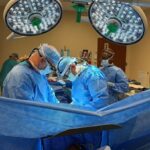
Dr. Beyer gave an example of what happens if somebody has a blockage in their carotid artery. "If they have a blockage that meets the criteria to be taken care of with surgery, then we do what’s called a carotid endarterectomy – incisions made on the neck, and the carotid artery is exposed. What we do is open up the artery and take out the plaque, and once the plaque is removed we close the artery back up. The idea is to get the blockage out and re-establish a normal artery for the patient."
Dr. Beyer has a video on YouTube showing him actually performing such a surgery. "You’ll see what I’m talking about as far as plaque or blockage, and you can see this huge plaque coming out that was actually blocking the artery. When you see it, you can tell why people have strokes. It’s pretty amazing. It’s a good example of what we do to clean out these arteries."
Stroke alert teams are not instituted at every hospital. Dr. Beyer said hospitals have to meet certain criteria, like having a team be available in a certain number of minutes after an alert is called. If it doesn’t meet all of the criteria it won’t be recognized as a center for strokes, but Florida Medical Center is, and is recognized as a stroke center of excellence by the entity that monitors these activities. He said he is excited about it and excited for the patients. "It’s amazing when somebody has a problem and you can do something to help them."
But it’s important to react quickly.