Imagine being in physical pain and having to spend hours traveling to the nearest medical specialist who is hundreds of miles away. Literally, “telemedicine” means distance medicine. It is the use of medical information exchanged from one site to another via electronic communications to improve patients’ health condition. Telemedicine allows physicians and health care specialists to diagnose and treat patients over distances regardless if that location is across the street, another part of the world or on a ship in the vast ocean.
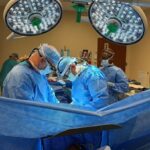
Imagine a surgeon sitting in Memorial Regional Hospital, performing a delicate operation on a patient in an operating room hundreds of miles away, using robotic arms and video telecams. It seems a bit sci-fi to think of it now, but robotic open heart surgery is being performed at MRH with great success (with the surgeon in the same room). This kind of technology will eventually bring specialized medical care directly to the people who need it. Currently, there are physicians who are using interactive video and consultations to treat patients. It is being practiced in rural areas, school districts, home-health settings, nursing homes, cruise ships, and on NASA space missions. Soon, this technology may be as everyday as a band-aid on a skinned knee.
Telemedicine typically involves physicians using interactive video consultations to treat patients. Interactive video allows medical specialists to directly communicate with their patients who are in another location, using television monitors and specially adapted equipment. Physicians also have the ability to send pictures, x-rays, biopsies and other patient information directly to the computer of a specialist. After reviewing that information, the specialist then sends the diagnosis back to the local doctor, who treats the patients and provides follow-up care.
It is estimated that the number of existing telemedicine networks in the United States is roughly 200, as stated by the American Telemedicine Association (ATA) and these programs involve close to 2,000 medical institutions throughout the country. The ATA states that, “it is estimated that about half (100) are actively providing patient care services on a daily basis.” The ATA also stated that the total amount of federal grants and contracts for telemedicine was roughly $270 million in 2003. These are available through six to eight federal programs.
There are many telemedicine programs world-wide using a variety of technologies to provide healthcare. At home in South Florida, the University of Miami uses telemedicine with state-of-the-art advanced telecommunications technology to transmit and receive patient information and medical data. UM currently provides consultations to Children Medical Services, nationally to the Great Plains Regional Medical Command and internationally to Latin America. University of Miami provides interactive laboratory research with Sweden, China and Italy with weekly teleconferencing sessions for diabetes at the Diabetes Research Institute. Furthermore, UM offers Interactive continuing medical education lectures to health care professionals in Brazil, Mexico and Germany in medical specialties. At the University of Kansas Telemedicine Program, telemedicine technology has been used for several years for oncology, mental health care to patients in rural jails, hospice care, and most recently, to augment school health services by allowing school nurses to consult with physicians.
In conclusion, its not so hard to imagine that telemedicine will soon be just another option to see a health professional. In the near future our homes may be preconstructed with integrated telemedicine capabilities in our personal home entertainment centers. In the mid-90’s Ronald C. Merrell, from Yale University School of Medicine said, “The innovations we will encounter as we step beyond feasibility are dazzling in their potential.” (Merrell 1995) In 2007, the potential of telemedicine, telehealth and e-health is still left to our imaginations.



 Imagine being in physical pain and having to spend hours traveling to the nearest medical specialist who is hundreds of miles away. Literally, “telemedicine” means distance medicine. It is the use of medical information exchanged from one site to another via electronic communications to improve patients’ health condition. Telemedicine allows physicians and health care specialists to diagnose and treat patients over distances regardless if that location is across the street, another part of the world or on a ship in the vast ocean.