The TGH Cancer Institute | Cancer Center of South Florida (CCSF) now offers a genetics program in Palm Beach County for patients who wish to take a proactive stance to determine their risk for cancer. The Hereditary Cancer Prevention & Risk Program is available to anyone with active cancer, previously diagnosed with cancer, or has a family history of cancer.
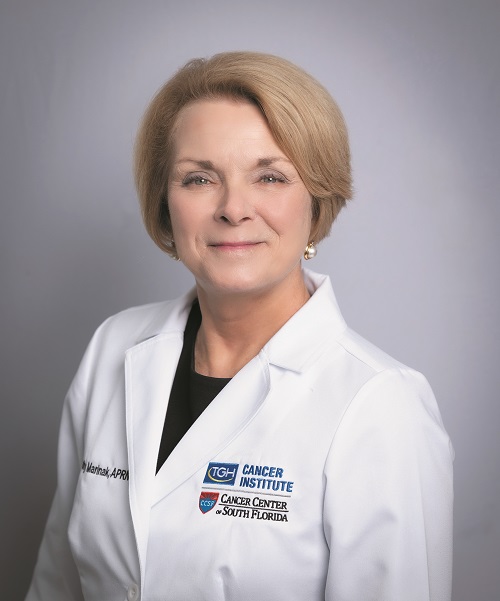
The program is led by hereditary risk counselor, Catherine Marinak, APRN, MSN, AOCNP, a nurse practitioner with an advanced specialization in cancer risk assessment. Each patient starts the program with an in-depth consultation with Marinak to discuss and review their family’s medical history. From there, she evaluates if the patient will benefit from a personalized, high-risk assessment and possible testing.
If it is determined that the patient should pursue a full risk assessment and/or genetic testing, the program includes:
- Discussion of the various genetic testing options.
- A review of the benefits of testing, including insurance coverage and confidentiality.
- Helping patients decide if genetic testing is right for them.
- Explaining the genetic testing process.
- Discussing medical management options based on family history and/or testing results.
- Addressing the emotional impact of cancer risk information on individuals and their families.
For patients who proceed with genetic testing, TGH’s experienced and compassionate team will explain your results clearly and understandably to help determine what’s next for you and your family. TGH works with a team of multidisciplinary specialists to help reduce your cancer risk or to detect and treat cancer early if there are treatment options available.
Genetic testing may be suggested if a patient’s family members have had one of the following:
- A cancer diagnosis before age 50.
- Multiple cancer diagnoses.
- Several relatives with similar cancers.
- Ovarian, pancreatic, or high-risk prostate cancer.
- Rare cancers such as male breast cancer, adrenocortical carcinoma, or pheochromocytoma/paraganglioma.
- Family members with a genetic test result that indicates an increased cancer risk.
“Through this program, we’re giving patients and their families the knowledge and support they need to take control of their health,” said Marinak, director of Hereditary Risk Assessment & Early Detection at the TGH Cancer Institute | CCSF. “By understanding genetic risks, we can take meaningful steps toward preventing cancer or catching it early, when treatment has the greatest impact. If a patient decides to pursue genetic testing, our team will be there to guide them every step of the way.”