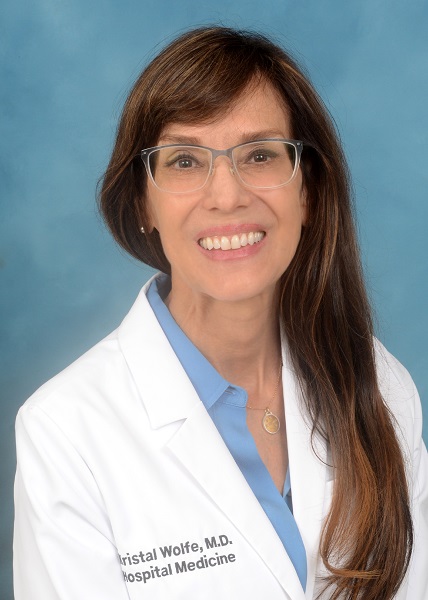
By Kristal Wolfe, MD
When I began my career 30 years ago, hospital medicine was in its infancy. Hospitalists were smaller groups of physicians, with a subset of patients assigned by emergency department (ED) call, a primary care office or an insurer. As a clinical minority in the hospital, it took time to earn the acceptance and respect of other specialists, one patient at a time. Three decades later, hospital medicine has evolved to include more physicians practicing across more subspecialties. Patients who come to the hospital, typically by way of the ED, have become accustomed to seeing a hospitalist who oversees their inpatient care, rather than their primary care physician (PCP) popping in for a visit, as was typical years ago.
This shift was driven by the need for efficiency as well as rising healthcare costs. Physicians are best at what they do routinely, and it’s challenging for PCPs to bounce back and forth throughout the day seeing patients in their office for appointments and checking on patients in the hospital. Hospitalists are dedicated day in and out to patients who are admitted to the hospital, providing them with the care and attention they deserve. They’re also masters of the hospital system who know the hospital’s layout, policies, procedures and standards of practice, and can thus tailor their communication style to meet the needs of different care teams within the hospital, with the aim of improving care and efficiency.
Communication is key, and hospitalists use a whole-team approach. They obtain collateral information from the PCP, confirm plans with outpatient specialists and healthcare proxies and advocate with the insurance companies for the most effective discharge disposition for the patient.
Sound Physicians (“Sound”), which was founded over two decades ago in the Pacific Northwest, has provided hospitalist services to Holy Cross Health in Fort Lauderdale for 13 years. As a national medical group, Sound partners with hospitals in communities coast to coast to provide hospitalist teams, as well as teams for emergency medicine, critical care and anesthesia. When the partnership between Sound and Holy Cross began, there were six hospitalists with private physicians from the community still admitting their own patients and taking the occasional ED call. Since then, Sound has grown to 24 physicians who handle more than 80 percent of admissions at Holy Cross, alleviating the workload for the majority of private physicians who entrust us to care for their patients.
At Holy Cross, we have a 21-to-1 patient-to-hospitalist ratio on an average day. Hospitalists work in a stimulating, intense, demanding environment with long days and grueling schedules for the benefit of the patient. They maintain continuity to build trust and confidence with the patient and their family, so they know they have an inpatient physician who is invested in their care and advocating for them throughout their stay — for the best outcome and experience.
As the needs of the patients of Broward County continue to grow, I see our group expanding to better care for the increasing complexity of patients’ health. No two patients are alike, and no two days are alike. Our patients’ complex cases with multiple comorbidities are what draw us to this specialty and are why we strive to stay up to date with and promote medicine’s rapidly evolving, evidence-based guidelines and practice standards.
When physicians-to-be are in medical school and deciding what path to take, some discover a passion for hospital medicine. We work side-by-side with our four resident teaching teams at Holy Cross, knowing that a positive experience for a resident can help them decide to join us as a hospitalist when they graduate. It’s uniquely rewarding to make an impact on a young physician, welcome them to our team and guide them along the early steps of their journey as a new hospitalist with Sound.
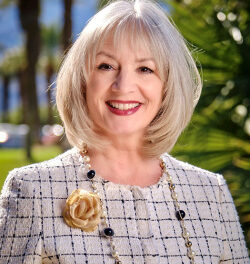
Dr. Kristal Wolfe is Medical Director of Sound Physicians and Chief of Internal Medicine at Holy Cross Health.