The chief medical officer’s role continues to evolve. Digital disruption in the healthcare field over the past decade has driven much of this change and will continue to do so in the future. Advances in healthcare technology, and processes is altering the healthcare landscape.
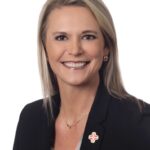
“We’re going to see more genetically focused treatments, so those treatments will be focused not only on the genetic makeup of a patient, but on the genetic makeup of that patient’s disease,” says Stanley W. Marks, M.D., FACS, Senior Vice President and Chief Medical Officer for Memorial Healthcare System. “Imaging will also become even more precise and patients will be able to enjoy decision support systems that physicians will be able to use that will channel huge vines of information, whether it’s the genome of a patient, the genome of the disease, with other demographics related to the patient, and target appropriate therapies to patients.”
Technology has also shaped the role of physician executives, as well, especially since it drives a healthcare system’s strategic initiatives.
“Moving forward, physician executives are going to be challenged with engaging physicians in this era, in time of significant change,” says Dr. Marks. “Physician leaders will be called upon in a greater and greater time to deal with strategic development and strategic initiatives in healthcare.”
Physicians in Executive Positions
Dr. Marks also expects to see more physician leaders moving into the executive suite, not only as CMOs, Chief Quality Officers or population health leaders, but also as CEOs. “The advanced physicians will take on all of these roles, strategy development, policy development, and more will be called upon to lead large healthcare organizations as well.”
All these advances are a dramatic shift from when Dr. Marks graduated from medical school in 1973. He came from a time when there was very little technology; in fact, the technology was so rudimentary that it was almost non-existent.
“Now with the advent and fully deployed electronic medical record system in our healthcare system at Memorial, the ability to get to information anywhere, anytime, almost from any location, including imaging on patients, is probably the most exciting and the biggest and dramatic change for me as a physician and as a physician leader,” he says.
In his role, Dr. Marks is focused on a variety of things. Graduate medical education and medical education programs falls under his purview. He also oversees clinical research and the office of human research. Bylaws, peer review and issues of new technology also fall under his purview.
“I work with others on the executive team in terms of dealing with population health and risk and whether we will be taking risk in the future,” says Dr. Marks. “Position employment matters and general clinical policy guidelines tend to be in my area. The quality and safety division reports up to me as well.”
Preparing for the Role of CMO
Dr. Marks started in this field really somewhat by accident over 20 years ago. He was actively practicing as a general vascular surgeon, and as a result of an illness, had to change careers. Around that time, after exploring several options, he was approached by the Vice Chief of Staff and one of the administrators at Memorial, who encouraged him to become involved in looking at quality and becoming a liaison with the medical staff.
“My career path was somewhat not planned, but more back door,” says Dr. Marks. “I essentially parlayed that initial opportunity through education by working with the other executives and administrators and taking a variety courses through The American College of Physician Executives. I gradually moved up the ranks and eventually became the Chief Medical Officer for one of the hospitals and then eventually the system.”
Now that he’s been in this position for about 20 years, Dr. Marks says that one of his most meaningful career achievements has been making that transition from an active lead practicing surgeon to an executive role.
“I think that was a major achievement because it occurred at a time when I was not ready to do that, but it was thrust upon me and I was able to make that successful transition,” recalls Dr. Marks. “I was then essentially able to parlay that transition into our system as it grew and as the roles and responsibilities of other Chief Medical Officer positions and medical director roles throughout our healthcare system, as well as my own role, kept growing and developing. Perhaps the current most meaningful achievement is starting this organization on its transformation, down an academic pathway, and developing our graduate medical education programs.”
As he looks ahead, one of the biggest concerns right now for Dr. Marks is that the rate of change in healthcare is probably the most dramatic that he’s ever seen since the start of his career.
“I don’t remember a rate of change in this industry as dramatic as what we’re seeing right now,” he says. “And it’s related to not only the Affordable Care Act and the expectations that are placed upon healthcare systems and physicians by both peers and by patients, but the uncertainties that are sitting out there right now for everybody that’s involved in healthcare.”
He adds that this challenge can only be met by people with a purpose and never forgetting why they went into medicine in the first place, which essentially is to care for patients and do the best job possible.
“Also, to be able to do it in an efficient manner and in a way in which we provide empathy and care for all those we care for,” he adds. “I think those become the biggest challenges, because the rapid rate of change is felt by physicians and nurses on the frontlines probably more dramatically than anybody else in healthcare.”
Advice on Becoming a CMO
Thinking about becoming a CMO someday? Dr. Marks has some simple words of advice.
“Practice a clinical specialty for at least 10 years before you go into the executive side of the house,” he says. “Either obtain an MBA while you’re getting your MD, or get an MBA when you’re making a decision to move into this role.”
And most importantly, he adds, never forget that you need significant clinical expertise and background before you attempt being a physician executive.
“I think it requires clinical creditability and clinical knowledge to do this job well,” he says. “These are going to be very exciting times both to practice medicine and to practice executive leadership in healthcare systems.”



 The chief medical officer’s role continues to evolve. Digital disruption in the healthcare field over the past decade has driven much of this change and will continue to do so in the future. Advances in healthcare technology, and processes is altering the healthcare landscape.