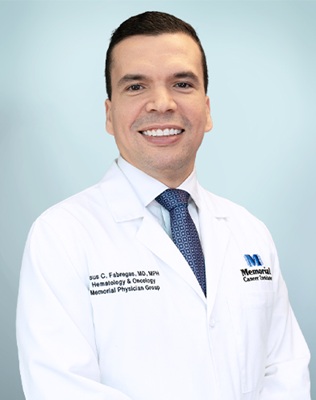
By Jesus C. Fabregas, MD, MPH
We are living through an extraordinary period of progress in gastrointestinal oncology. Treatments are becoming more precise, molecular targets once considered “untreatable” are becoming actionable and new technologies are helping us understand whether cancer remains after treatment.
But innovation alone is not enough. The latest treatment can only change a patient’s life if that patient can access it.
That belief shapes my work at Memorial Cancer Institute, where I serve as principal investigator on Phase I through III clinical trials and participate in the Alliance Colon Cancer Task Force and GI Committee. The standard of care is our starting point – the present – but clinical trials represent the future. My job is to help make sure those future options are available to patients here in Broward County, not only at major academic centers elsewhere.
Sometimes, however, even a clinical trial isn’t enough.
Recently, Memorial Cancer Institute became the first cancer program in Broward County to obtain daraxonrasib through the FDA’s Expanded Access, or “compassionate use,” program. The investigational therapy represents a promising new approach for pancreatic cancer, where patients who have exhausted standard treatments may have few remaining options.
We pursued Expanded Access because some of our patients with pancreatic adenocarcinoma had reached exactly that point. They had exhausted standard therapies but could not enroll in an open clinical trial because of other medical conditions, previous treatment or simply because no trial slot was available. Daraxonrasib had shown encouraging activity, but broader approval remained months away.
Working with the drug sponsor and the FDA, our multidisciplinary team at Memorial Cancer Institute secured an emergency Institutional Review Board review and worked to get the medication into eligible patients’ hands as quickly as possible. In July, the first Memorial patient received the therapy through the program.
In GI oncology, the clock is unforgiving. A patient with refractory metastatic disease may not have six months to wait for an approval. Expanded Access can provide a critical bridge between scientific progress and the patient sitting in front of us today.
It also points to a larger issue in cancer research: who actually benefits from innovation?
My training in epidemiology has shaped how I think about that question. We can conduct a scientifically flawless clinical trial and still fail our community if the people in our clinics never have an opportunity to participate. Access to clinical trials is improving nationally, but we still have considerable work to do.
That work is especially important because the future of cancer research is remarkably promising.
One area I am particularly excited about is circulating tumor DNA, or ctDNA, and minimal residual disease. We are moving toward determining with greater precision which patients may still have cancer after surgery. That could allow us to escalate treatment for patients who need it while sparing others unnecessary chemotherapy.
We are also making progress against molecular targets that were considered undruggable for decades. KRAS is now a target. Patients with BRAF V600E colorectal cancer have new treatment options, as do those with HER2-amplified disease. Antibody-drug conjugates are opening possibilities in tumors that historically have responded poorly to treatment.
Innovation is also about more than survival. It is also about preserving quality of life. In mismatch repair-deficient rectal cancer, for example, we are seeing some patients achieve complete responses with immunotherapy and potentially avoid major surgery and a permanent ostomy. Curing cancer remains the goal, but we should strive for cures that allow people to live well afterward.
For me, that mission is deeply personal.
My mother died from metastatic colorectal cancer at age 42. Before she died, she looked me in the eyes and told me, “You are going to be an oncologist.”
So here I am.
I was too young then to understand everything those words would come to mean. Today, I understand that cancer affects not only the person diagnosed but an entire family. I also understand how much we still do not know – and how urgently we need to close those gaps.
GI oncology chose me as much as I chose it. The science moves quickly, but the relationships with our patients are long. We may walk alongside them for years. Sometimes we win, and sometimes we lose.
What we can always do is be earnest in our efforts: push the science forward, make its advances accessible and try as hard as we can for every patient we have the privilege to serve.
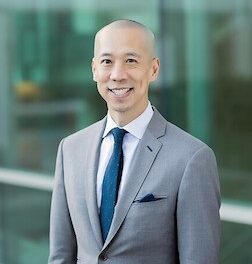
Dr. Jesus Fabregas is a GI medical oncologist at Memorial Cancer Institute, part of Memorial Healthcare System.