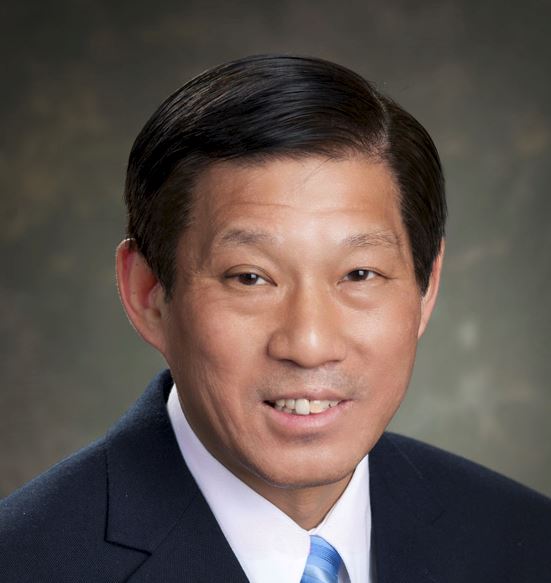
By Christopher Chang, MD
Could AI Replace Physicians?
If you could ask a machine about your symptoms at 2:00 a.m., receive an answer in seconds, and never have to wait for an appointment, would you trust it to be your physician?
Artificial intelligence (AI) is rapidly changing how we access and understand health information. Patients are already using AI tools to research symptoms, interpret medical information, understand test results, and explore treatment options. The convenience is undeniable. The possibilities for medicine are exciting. But dangers also exist, as several leaders in AI have recently cautioned.
But there is a fundamental question we need to ask: Could AI Replace Physicians?
My answer, as a physician, is no.
That does not mean we should fear AI. Quite the opposite. AI has tremendous potential to help physicians analyze information, identify patterns, improve efficiency, support clinical decision-making, and reduce administrative burdens. Used responsibly, it can become an extraordinarily valuable tool in our medical toolkit.
AI is also evolving at a remarkable pace. New forms of technology, including agentic AI, may provide physicians with even greater support by performing increasingly complex tasks and helping coordinate information and care. At the same time, these capabilities introduce new questions about safety, accountability, privacy, and the role of human judgment.
It is also possible that, in the not-too-distant future, AI could outperform physicians in certain aspects of diagnosing, treating, or even developing cures for disease. Technology may become increasingly sophisticated at understanding human emotions and responding in ways that feel empathetic and deeply personal.
But a tool is not a physician.
Medicine is more than collecting symptoms and matching them to a diagnosis. A physician considers the patient’s history, examination, medications, family circumstances, preferences, environment, and countless subtle details that may never appear in a dataset. We recognize when something doesn’t make sense. We ask the next question. We weigh competing possibilities. We understand that two patients with the same symptom may require entirely different approaches.
And perhaps most importantly, we know the patient.
There is another concern we cannot overlook: misinformation. The World Health Organization (WHO) has cautioned that large language models can produce health information that appears authoritative and plausible but may be incorrect. WHO has also warned that these technologies can be misused to create and disseminate highly convincing disinformation.
That is particularly concerning in healthcare, where the difference between accurate information and misinformation can have real consequences.
This is why the physician’s role becomes even more important, not less, in an AI-enabled healthcare system. Patients need someone who can distinguish information from evidence, probability from certainty, and a generic answer from the right answer for them. They need someone who can put information into context, recognize uncertainty, explain options, and ultimately take responsibility for the clinical decision.
The future of medicine should not be AI versus physicians. It should be AI with physicians.
That is the conversation we will advance at the Broward County Medical Association’s AI in Healthcare Conference on October 17. We will explore how physicians can embrace the opportunities AI offers while addressing the ethical, clinical, privacy, safety, and misinformation challenges that accompany it.
The question is not whether AI will become part of medicine. It already has. The more important question is how we, as physicians, will choose to use it.
And perhaps that conversation will look different across generations. Physicians who began practicing before the digital age may approach AI differently from younger physicians who have incorporated technology into nearly every aspect of their education and clinical experience. How are today’s residents and early-career physicians using AI? What do they trust it to do? Where do they draw the line? And what can different generations learn from one another?
AI may one day surpass us in ways we cannot yet anticipate. But people are people, and machines are machines. As technology continues to transform medicine, the challenge and opportunity is to ensure that innovation strengthens, rather than diminishes, the human relationship at the heart of healthcare: the relationship between a physician and a patient.
Dr. Christopher Chang is President, Broward County Medical Association.