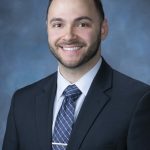
Wayne Brackin (R) with Raj Maragh (L), who’s currently serving as Director of Emergency Preparedness at Mount Sinai Medical Center.
By Vanessa Orr
While hurricane season isn’t anything new to Floridians, this year it’s even more important to be prepared as overall hurricane activity is predicted to be more than twice that of an average year. NOAA’s 2024 prediction is for an 85 percent chance of an above-average hurricane season in the Atlantic, which is their most aggressive forecast on record. This not only means that individuals and families must be ready to survive a storm, but that healthcare facilities and hospitals must also prepare for the worst.
“We’re already seeing rising sea level issues creating flooding—sometimes severe—during random times of the year, and the superheating of the water is also relatively new,” said Wayne Brackin, president and CEO of KIDZ Medical Services, of evolving weather conditions. “In 2004, four storms made landfall Florida; really significant hurricanes. And I’m wondering if we’re going to have another year like that.”
To this end, hospitals are doing everything they can to get ready.
“Broadly speaking, hospitals in South Florida have well-thought-out plans and people who are used to deploying them,” said Brackin. “These plans are pretty granular; as things escalate from watches to warnings, you go through specific steps of preparation, and historically, we’ve done a good job with it.
“When you exist in regions prone to natural disasters, over time, you gain some pretty good institutional knowledge and have preparations in place,” he added. “There’s also the repetition of having to deal with these issues on an ongoing basis.”
One change to this year’s hurricane preparation at KIDZ Medical is a text-based emergency communication system called SimpleTexting. “With nearly 500 people in 30 hospitals and offices in six Florida counties, we need to communicate instantaneously with not only the entire organization but to also give precise guidance to subgroups depending on geography,” said Brackin. “As a storm’s path becomes clear, the message to Naples will differ from Palm Beach or Homestead. SimpleTexting allows us to do that.”
One of the big issues facing healthcare facilities is the fact that when there is a busy season, it can be exhausting for staff because they have to do everything to get ready whether the storm comes or not. Brackin adds that these storms—even if they miss the area entirely—can take a huge financial toll on doctors and healthcare systems that have to cancel patient appointments and elective surgeries, as well as go on an emergency schedule, often two or three times in a given month.
With the influx of new residents into Florida, there is also a concern that some people will not know how to prepare for hurricane season.
“In the last several years, a significant number of people relocated to South Florida, and that includes hospital staff as well as members of the wider community,” said Brackin. “People from the East Coast and Midwest are used to dealing with snowstorms—not hurricanes.
Because KIDZ Medical provides services to many different hospital locations, they coach their staff on how to prepare for hurricane season, both at work and at home. “If people haven’t done what they need to do at home, it creates an entirely different issue about their availability to work,” said Brackin.
Some of the things that KIDZ recommends are to have a family communication plan so that loved ones can stay in touch with each other, and to also have default methods of communication in case cell towers go down. Families should have an agreed-upon place where they will meet, and ideally, if they have friends or family in a more inland location, make that the gathering place.
“We always counsel people to have a week’s worth of supplies, including food and water,” said Brackin. “If you can last a week, the power will come back on and there will be enough relief available to help. We also advise people to prepare now for hurricane season, which begins June 1, so that we can avoid everyone flooding into Publix at the last-minute emptying shelves. Try to avoid being involved in that madness to help lower everybody’s stress level.”
He notes that in general, the hard part of a hurricane is not the storm, but the aftermath and recovery.
“The storm may last a few hours, or a day or overnight, but the recovery can go on for weeks or months,” he said, adding that this year may be especially difficult as the state’s insurance crisis has forced many people to “go bare,” so they no longer have insurance on their homes.
“From a healthcare provider standpoint, the preparation that needs to happen for a storm is relatively straightforward, but the real difficulty is managing damage to healthcare infrastructure in the post-storm environment and the ability to retain staff,” he added.
“In my view, that’s when you find out whether you’ve done a good job maintaining morale and keeping people engaged in the purpose of the organization—seeing how things go in the aftermath.”