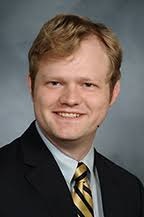
August 21, 2025 – The Foundation for the National Institutes of Health (FNIH) will award the 2025 Paul-Gallin Trailblazer Prize for Physician-Scientists to Matthew Greenblatt, MD, PhD, of Weill Cornell Medicine and NewYork-Presbyterian/Weill Cornell Medical Center. Dr. Greenblatt and his team have discovered three distinct stem cell types involved in bone formation, revealing potential therapeutic targets for osteoporosis, rare genetic disorders of the bone, and cancer metastases.
“Dr. Greenblatt’s work epitomizes the critical role of physician-scientists in turning basic science discoveries into therapies for patients and embodies the spirit of the Paul-Gallin Trailblazer Prize,” said Steven Paul, MD, Chair of the FNIH Board of Directors. “His pioneering research has reshaped our understanding of the stem cells and cell lineages that form bone, showing them to be more diverse and specialized than previously believed. He and his team have also demonstrated that these novel discoveries about bone development are useful in developing new treatments for diseases involving bone.”
According to Dr. Greenblatt’s research, bones in different areas of the body are formed by distinct types of stem cells, each with unique traits that can affect how diseases develop in those regions. For example, his laboratory has found that stem cells responsible for generating vertebrae make the spine particularly susceptible to metastases from cancer of the breast and prostate. Building on these insights, he and his team are working to identify new therapeutic approaches to prevent spinal metastases as well as to increase bone mass and prevent fractures.
“The heart of being a physician-scientist is working on that slow process of seeing your ideas about disease first slowly gather evidence and then later gather acceptance,” Dr. Greenblatt said. “I am very grateful to receive the Paul-Gallin Trailblazer Prize, which reflects the dedication of my team and the readiness of our ideas to move out of the lab to create broader impact.”
Dr. Greenblatt is an associate professor of pathology and laboratory medicine and associate director of the pathology residency training program at Weill Cornell Medicine in New York, where he is also a Rohr Family Research Scholar. He serves as an associate attending pathologist at NewYork-Presbyterian/Weill Cornell Medical Center and is Co-Director of the Skeletal Health and Orthopedic Research program at Hospital for Special Surgery in New York.
The Paul-Gallin Trailblazer Prize includes a $100,000 honorarium and recognizes the outstanding contributions of early- to mid-career physician-scientists whose research translates basic discoveries into novel approaches for diagnosing, preventing, treating, or curing disease and disability. The award honors two important physician–scientists, Dr. Paul and the late John Gallin, MD. Dr. Paul initiated the endowment for this prize last year with a generous $1 million gift. Dr. Gallin was the longest-serving director of the NIH Clinical Center, who, with his wife Elaine Gallin, PhD, created the Trailblazer Prize in 2018 in partnership with the FNIH.
A jury of distinguished biomedical research leaders selected Dr. Greenblatt as the 2025 Paul-Gallin Trailblazer Prize recipient. Michael J. Welsh, MD, PhD, Director, Pappajohn Biomedical Institute, University of Iowa, chaired the Trailblazer Prize jury, which also included Dr. Paul; Howard Y. Chang, MD, PhD; Helen H. Hobbs, MD; Timothy J. Ley, MD; and Kim Rathmell, MD, PhD, MMHC; Christine E. Seidman, MD; and Huda Yahya Zoghbi, MD.
Dr. Greenblatt will receive the award at the 13th Annual FNIH Awards Ceremony on October 22, 2025, in Washington, D.C. The 2025 Montrone-Seigel Prize in Biomedical Sciences; the Charles A. Sanders, MD, Partnership Award; and the Kovler Prize for Trust in Life Science Journalism also will be presented during the ceremony.
Dr. Greenblatt will share his research at the 2026 AAP/ASCI/APSA Joint Meeting in Chicago, occurring April 17-19. This combined annual gathering of the Association of American Physicians, the American Society for Clinical Investigation, and the American Physician Scientists Association features presentations of high-level discoveries from distinguished researchers.
The FNIH gratefully acknowledges its Annual Awards Ceremony Premier Sponsors, Fred and Donna Seigel and Mr. Perry Steiner and Ms. Vanessa Kay, and our Visionary Sponsor, Pfizer, Inc. For more information about the Trailblazer Prize, visit fnih.org/TrailblazerPrize.
About the Foundation for the National Institutes of Health
The Foundation for the National Institutes of Health (FNIH) builds public-private partnerships that connect leading biomedical scientists at the National Institutes of Health (NIH) with their counterparts in life sciences companies, academia, patient organizations, foundations, and regulatory agencies (including the Food and Drug Administration and European Medicines Agency). Through team science, the FNIH solves complex health challenges and accelerates breakthroughs for patients, regardless of who they are or what health threats they face. The FNIH contributes to the development of new therapies, diagnostics, and potential cures; advances global health; and helps train the next generations of scientists. Established by Congress in 1990 to support the mission of the NIH, the FNIH is a not-for-profit 501(c)(3) charitable organization. For more information about the FNIH, please visit fnih.org.
HSS is the world’s leading academic medical center focused on musculoskeletal health. At its core is Hospital for Special Surgery, nationally ranked No. 1 in orthopedics (for the 16th consecutive year), No. 3 in rheumatology by U.S. News & World Report (2025-2026), and the best pediatric orthopedic hospital in NY, NJ and CT by U.S. News & World Report “Best Children’s Hospitals” list (2024-2025). In a survey of medical professionals in more than 20 countries by Newsweek, HSS is ranked world #1 in orthopedics for a fifth consecutive year (2025). Founded in 1863, the Hospital has the lowest readmission rates in the nation for orthopedics, and among the lowest infection and complication rates. HSS was the first in New York State to receive Magnet Recognition for Excellence in Nursing Service from the American Nurses Credentialing Center five consecutive times. An affiliate of Weill Cornell Medical College, HSS has a main campus in New York City and facilities in New Jersey, Connecticut and in the Long Island and Westchester County regions of New York State, as well as in Florida. In addition to patient care, HSS leads the field in research, innovation and education. The HSS Research Institute comprises 20 laboratories and 300 staff members focused on leading the advancement of musculoskeletal health through prevention of degeneration, tissue repair and tissue regeneration. In addition, more than 200 HSS clinical investigators are working to improve patient outcomes through better ways to prevent, diagnose, and treat orthopedic, rheumatic and musculoskeletal diseases. The HSS Innovation Institute works to realize the potential of new drugs, therapeutics and devices. The HSS Education Institute is a trusted leader in advancing musculoskeletal knowledge and research for physicians, nurses, allied health professionals, academic trainees, and consumers in more than 165 countries. The institution is collaborating with medical centers and other organizations to advance the quality and value of musculoskeletal care and to make world-class HSS care more widely accessible nationally and internationally. www.hss.edu.