


By Jennifer Williamson
As the fight against cancer advances, so too does the understanding that safeguarding heart health is a crucial piece of the puzzle – ushering in the rise of cardio-oncology as an essential medical discipline.
The first cardio-oncology program was established in the United States 25 years ago, and in 2015 the American College of Cardiology (ACC) debuted a Cardio-Oncology Intensive Session at its annual conference. Today the ACC, the American Heart Association, and the European Society of Cardiology (ESC) have dedicated working groups focused on cardio-oncology, while the International Cardio-Oncology Society (IC-OS) boasts 1,100 members from more than 30 countries.
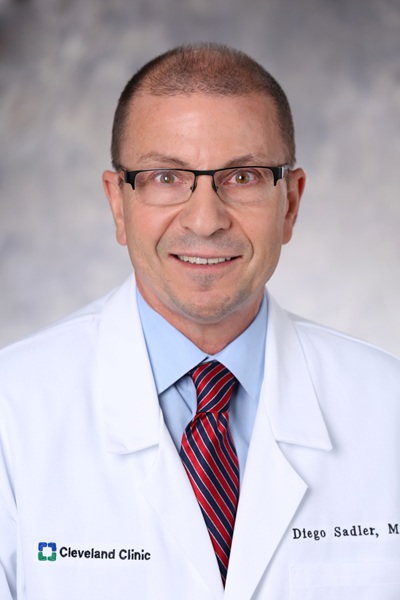
“Tremendous effort has been made in advancing the field of cardio-oncology, which has seen rapid growth here in the U.S. and abroad,” reports Diego Sadler, M.D., Section Head of Cardio-Oncology at Cleveland Clinic in Florida. “We’ve learned a lot about how to prevent, detect and treat cancer treatment related cardiovascular disease, but there is still so much more we don’t know and even more that we need to do to improve patient outcomes worldwide.”
A bidirectional relationship
Dr. Sadler notes that cardio-oncology today is much more than just treating toxicities. “There is a commonality between cancer and cardiovascular disease, including common risk factors and a bidirectionality between these two worldwide leading causes of mortality,” he says.
According to the National Cancer Institute, the number of U.S. cancer survivors is projected to reach 26 million by 2040. Studies indicate that patients with cancer face a 2- to 6-times higher risk of cardiovascular disease mortality compared to the general population.
“Likewise, there is growing evidence that patients with cardiovascular disease, such as heart failure and coronary artery disease, have cancer more frequently than the general population,” explains Dr. Sadler. “We need to better understand this relationship.”
Establishing quality metrics
One of the initiatives essential to the future of cardio-oncology, notes Dr. Sadler, is defining and measuring quality metrics within the field to improve patient outcomes and reduce variations in clinical practice. He is part of an international team of specialists from the IC-OS and ACC Cardio-Oncology Section Leadership Council who joined forces to propose a roadmap for establishing quality metrics specific to cardio-oncology.
Published earlier this year in the JACC: CardioOncology, the document acts as a guide for future progress. It draws on both the Institute of Medicine (IOM) framework for evaluating healthcare quality and the Donabedian model. The IOM identifies domains critical to health care quality: safety, timeliness, effectiveness, efficiency and patient-centeredness. While the Donabedian model designates quality metrics as either structural, process or outcome focused.
“The subspecialty of heart failure serves as a strong example of how performance and quality metrics can drive improvements in patient outcomes,” says Dr. Sadler. “By systematically analyzing cardio-oncology quality metrics, we aim to refine clinical guidelines and ultimately enhance patient care.”
Global registry pilot phase
Dr. Sadler points to the important role the Global Cardio-Oncology Registry (G-COR) will have in helping establish the incidence of CTR-CVT, identify risk factors, and lead to the development of validated risk score models to guide treatment decisions in different geographic locations throughout the world.
The G-COR is a multinational, multicenter prospective observational cohort registry launched in March 2023. The registry has enrolled 700 breast cancer patients across 19 U.S. academic and community hospitals during its pilot phase.
“Cleveland Clinic Weston Hospital was the lead enrollment site for the breast cancer pilot and enrolled 120 patients,” says Dr. Sadler. He serves as principal investigator of the G-COR and is based at Weston Hospital, which was recently recertified as a Gold Center of Excellence by the IC-OS (2025-2028). It is the only center in South Florida and one of just three in the state to achieve this distinction.
Once fully activated, the G-COR will include 119 medical centers from 21 countries across five continents. These sites will enroll approximately 5,000 patients worldwide within three distinct patient populations: individuals with breast cancer, hematological malignancies, and those treated with check point inhibitors immunotherapy.
“The research supported by this registry has the potential to shape cardio-oncology treatment strategies that could benefit countless patients,” observes Dr. Sadler.























