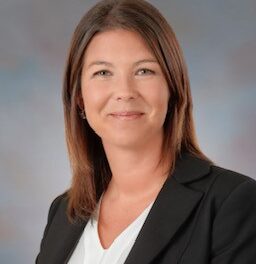
As Associate Dean and Chair of the Division of Nursing at Barry University in Miami Shores, Claudette Spalding, PhD, ARNP, CNAA, has confronted the challenges that face nursing education.
|
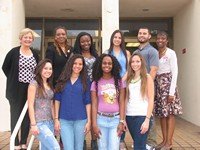
Experienced nursing faculty is imperative in developing a new generation of registered nurses and nursing leaders. Photo courtesy of |
.jpg)
According to the Bureau of Labor Statistics, nursing is one of the fastest growing fields in the nation, and is expected to offer among the largest number of new jobs for any occupation. In order to meet this need, Schools of Nursing must encourage the advancement of education at all levels.
One of the major challenges facing nursing education, Dr. Spalding said, is “increasing the number of nurses with a baccalaureate degree and encouraging nurses with associate degrees and diplomas to enter baccalaureate programs within five years of graduation.” She also points to the need for more nurses to pursue master’s and doctoral degrees.
Nursing faculty shortage
This prospect faces one large challenge, though: the shortage of nursing faculty. The American Association of Colleges of Nursing recently reported that in 2010, two-thirds of the schools that responded to its nationwide survey cited faculty shortages as a reason for not admitting a greater number of qualified applicants into its undergraduate and graduate programs.
So what is at the heart of this shortage? An aging nursing faculty that is nearing retirement and too few nurses with the advanced education to replace them, the AACN suggests. Competition is another factor, Dr. Spalding said.
Schools must address the faculty shortage by “creating salary and benefits packages that are market competitive,” which would make the position more attractive to prospective nurse educators.
Meeting the challenge
Barry University has positioned itself to meet these challenges. In order to advance South Florida’s RNs, Barry has partnered with both Baptist Health South Florida in Miami-Dade County and Memorial Healthcare System in Broward County to bring its RN-BSN program to their campuses.
Barry also offers a number of nursing master’s and doctoral degrees, including the Master of Science in Nursing with a specialization in nursing education
Barry has been awarded the Nurse Faculty Loan Program from the Health Resources and Services Administration of the U.S. Department of Health and Human Services for three years now, which has resulted in more than $3 million in funding. The loan program seeks to close the gap in the nursing faculty shortage by assisting nurses who return to school to pursue their master’s degree in nursing education.
A nurse accepted into the Nurse Faculty Loan Program can expect an 85 percent forgiveness policy, meaning only 15 percent of the loan would need to be paid back. They must begin teaching as a full-time nursing faculty member at any college or university, including Barry, for five years after graduation.
To help attract top talent to maintain its own expert nursing faculty, Barry’s salaries are also becoming more competitive with salaries of nurses working outside of academia, Dr. Spalding added.
Advice for future nurse educators
“Remember: As a nurse educator you have high job security, good pay, and convenient working hours,” Dr. Spalding said. But in order to enter the nursing education field, she emphasized, registered nurses must have a passion for both the nursing profession and teaching.
“Try precepting to see if you like teaching,” she said. “If this works well, move on to clinical adjunct, which allows you to maintain your full-time position and experience as an adjunct teaching a group of nursing students in the clinical area.”
When you are looking at degree programs, keep in mind that not every School of Nursing is the same. Do your homework. Be sure to research the school, its faculty, the curriculum, student resources, and the school culture.
“Your nursing and teaching philosophy should agree with the School of Nursing’s,” Dr. Spalding said.
An increase in qualified nurse educators will advance the profession and ensure that talented, qualified students get the training necessary to address the state’s and country’s pressing health care needs.