Broward Health continues to provide oncology patients with access to new, technology. From investment in detection and genomics to system-wide expansion of robotics and therapies, Broward Health is committed to bringing the latest oncology innovations to patients, creating a continuum of care throughout its hospitals.
While modern treatment options are critical, the fight against cancer begins with detection. Broward Health North’s Comprehensive Cancer Center is now offering genetic testing to develop individualized, comprehensive treatment plans. By looking at a patient’s genetics, physicians are better able to identify which therapy, immunotherapy or chemo-immunotherapy will provide the best clinical benefit for each patient.
Broward Health North also uses technology designed to detect cancer cells early with less radiation exposure for the patient. The Varian Image Guided Radiation Therapy System provides, prior to treatment, can provide a more precise confirmation of tumor positioning. Clinicians can then deliver higher doses of radiation to tumor sites while sparing adjacent healthy tissues.
To detect cancers and other conditions early, Broward Health North has the 256 Dual Source Flash CT Scanner and 3-D Tomosynthesis. The scanner reveals information about the structure and function of cancer cells and tissues in one imaging session with the patient, and it assists radiologists in the detection of cancer cells that could have previously been missed, which can increase the chances for successful treatment for cancer patients.
If treatment is needed, Broward Health North has the CyberKnife® Robotic Radiosurgery System, which provides real-time image guidance for treatment of cancerous tumors. It is designed to treat tumors with pinpoint accuracy, minimizing damage to surrounding healthy tissue. The CyberKnife® is a non-invasive alternative to surgery, and treatment is usually completed in one to five sessions.
Interventional radiology techniques can also be performed to prolong survival and help treat cancers, including liver. Y90 radio-embolizations and chemoembolization offer direct deliverance of cancer-killing medications to the specific site of the tumor.
 At Broward Health Medical Center, Galal El Gazzaz, M.D., Ph.D., abdominal transplant and hepatobiliary surgeon, treats new liver tumors – aside from liver hepatomas – by transplanting the liver.
“Because cirrhotic liver keeps generating new cancers,” said El Gazzaz, “it is better to replace the liver by transplant than to follow a traditional way of treatment.”
New liver tumors, such as neuroendocrine tumors and very early cholangiocarcinoma – falling within very restrictive criteria – can be treated by liver transplant with better outcomes, in some instances, than traditional cancer treatments. Good candidates for the treatment are patients with cirrhotic liver and small cancer with no more than three tumors that are not attached to large vessels.
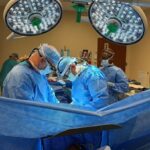
To enhance surgical options for oncology patients, Broward Health Coral Springs has expanded its robotic surgery program with the addition of two da Vinci Surgical Systems. In addition to expanding the ease and safety of minimally-invasive surgery for more types of operations, the da Vinci Surgical System can be integrated seamlessly with other technologies.
One example is Firefly technology, which uses a dye to highlight the difference between cancerous tissue and healthy tissue. This enhances a surgeon’s ability to capture cancerous tissue with more precision. Surgeons can use standard endoscopic visible light to assess vessels, blood flow  and related tissue perfusion, as well as near infrared imaging.
and related tissue perfusion, as well as near infrared imaging.“We have used this technology for gall bladder removal and for blood supply evaluation during colon surgery,” said Mark Shachner, M.D., a surgeon with Broward Health Coral Springs. “It has been an exciting innovation.”
Another example of integrating technology into robotic procedures is the immersive 3D-HD vision system. This provides surgeons with a highly magnified view, virtually extending their eyes and hands into the patient.
“Leveraging technology enables us to offer patients the possibility of fewer complications and a more tailored approach,” said Broward Health President/CEO Gino Santorio. “Our patients deserve state-of-the-art healthcare, and we are committed to providing it.”