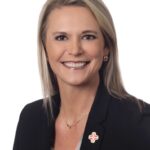
.jpg) On David Zambrana’s last day at University of Miami Hospital (UMH), a nurse walked into his empty office and handed him an envelope with a letter. Zambrana, then chief executive officer of UMH, was leaving to take the same position at Jackson Memorial Hospital just across the street.
On David Zambrana’s last day at University of Miami Hospital (UMH), a nurse walked into his empty office and handed him an envelope with a letter. Zambrana, then chief executive officer of UMH, was leaving to take the same position at Jackson Memorial Hospital just across the street.
In part, her letter read, “I’d like to thank you for what you have done for this organization. As a new graduate nurse and nurse who has only worked in this institution, I longed for leaders who were interested in propelling the nursing profession forward. I needed a leader who listened, who cared, and was genuinely interested in upmost quality of patient care.”
It continued, “I can honestly say you were the leader that I needed to drive me forward in this hospital. I never left any of those meetings without a renewed outlook on work. You are … an inspiring leader.”
“The words on this letter say it all to me," says Zambrana, who was named CEO at Jackson Memorial in April. “This is what makes it all worth it.”
Transitioning from nursing to administration
Zambrana, who was previously a chief nursing officer at Tenet hospitals before joining UMH, graduated with honors in the first Doctor of Nursing Practice class at the University of Miami. Early in his career he worked in cardiac surgery intensive care, trauma, and pediatric intensive care at Jackson. He was persuaded to enter the nursing profession while in high school, after attending his sister’s nursing school dedication.
“This was a process where individuals enrolled in nursing school go through a symbolic ceremony that signifies their dedication to the profession,” he says. “I found the process moving and decided to follow in her footsteps.”
Nursing is not a career for the faint at heart, he notes. For this reason, he says it is so important that anyone considering a career in nursing, or healthcare for that matter, see this work as a calling – caring for people during what is often the most difficult times of their lives.
“You must be compassionate, dedicated, and able to handle any situation that comes your way; therefore, nursing is not for everyone,” he says.
During his career, Zambrana’s role as a nurse gradually transitioned from the bedside into administration, and ultimately chief executive officer. Despite having a strong understanding of healthcare finance and operations, he says that nurse executives approach their respective roles from the perspective of how will the decisions they make affect those they serve—patients, their families, and their teams.
“Having personally performed many roles along the clinical continuum, I lead with the employees in mind because I can relate to what they may be experiencing,” he explains. “I’ve walked a mile in their shoes, so to speak. Nurse Executives often do well when they transition to CEO positions because of their well-rounded experiences on both the clinical and operational side of the business.”
Zambrana’s journey from a nurse to hospital CEO has been driven by hard work, opportunity, demonstrated results, and the unwavering support of many individuals along the way who were committed to seeing him succeed.
“I was always intrigued by leadership,” he says. “I have always admired great leaders throughout my career.”
Among those leaders Zambrana mentions: Silvia Stradi and Philip Peoples, his first nurse managers in the open heart ICU, both of whom were experts and modeled what an exemplary nurse should be; Carol Daley and Al Hernandez, his nurse leaders at the Ryder Trauma Center, both of whom modeled the pride and honor of being a trauma nurse and the responsibility they had to their patients and their families; and Carrie Feinroth, his nurse manger in the Pediatric ICU at Holtz Children’s Hospital, a loving and committed nurse leader to everyone she interacted with and someone who has made a lasting impact on him both personally and professionally.
Zambrana recalls a defining moment in his career path while working at Delray Medical Center, where he had an opportunity to work with Laura Cillo, the chief operating officer at the time.
“Laura took a great deal of interest in me and my potential,” he says. “When I interacted with Laura, it was clear to me that she saw more in me than I saw in myself at that time. While I often aspired to grow, it was through that process that I realized that becoming an executive leader was an attainable goal for me.”
Whether as a nurse or hospital administrator, Zambrana says the most rewarding part of his job is being part of a team that works together to care for and heal the sick and comfort their families. “It is an extraordinary privilege that I never take for granted. I also take great pride in the relationships that I develop with employees from all walks of life who work in various roles throughout the hospital.”
Returning to his roots
Zambrana considers the opportunity to return to Jackson Memorial Hospital in the role of CEO as a true honor. The system’s tag line “Miracles Made Daily” is not just a catchy phrase, he says, but rather it is what the teams throughout Jackson Health System do on daily basis.
“There is a sense of ownership and pride among the staff here that is infectious and speaks to the invaluable services this health network brings to our community,” he says. “I realize that every day that I come to Jackson I am fulfilling an opportunity of a lifetime.”
In nearly a century, Jackson has grown into one of the nation’s largest public health systems. It is the safety net system with a mission of providing quality care to every Miami-Dade resident who walks through its doors – and Zambrana says that they are committed to upholding that mission for future generations.
Since South Florida is a highly competitive healthcare marketplace, Zambrana says that Jackson must distinguish itself from other hospitals in the region and become the hospital of choice for patients. While Jackson has a longstanding reputation for providing world-class care to some of the most critically ill patients, Zambrana says that they want to make it the hospital people choose for routine procedures, not just the hospital that people go to if their life depends on it.
“Jackson must also become more competitive to attract paying patients, which will compensate for our expectation that public funding for Jackson will continue to decline,” he says.
What he believes that truly sets Jackson apart from the competition is its unique affiliation with the University of Miami Miller School of Medicine, home to some of the world’s most skilled and highly regarded physicians.
“Jackson is considered a national leader in many service lines, such as transplant, trauma, and neurological surgery, where UM doctors work alongside Jackson’s expert nurses to provide patients with the highest quality care with excellent clinical outcomes,” he says. “We will continue to build upon these important services.”
Looking ahead
A decade from now, Zambrana expects the landscape of Jackson to look quite different because the health system is growing and expanding its reach farther into previously underserved communities in Miami-Dade County.
“Still, I am confident that the world-class medical care it provides will remain unchanged,” he says.
Jackson has embarked on a $1.4 billion, 10-year capital plan to build new facilities and upgrade existing facilities, including a new rehabilitation hospital on the Jackson Memorial campus; a new hospital, pediatric and adult emergency room, and outpatient center in West Miami-Dade County; and a network of urgent care centers throughout the county.
“Jackson is a part of the fabric of Miami-Dade County that has had a profound impact on so many people and families in our community,” Zambrana adds. “That will not change.”
Beyond growing Jackson and expanding its reach, Zambrana was asked about his legacy and what he hopes people will remember him for.
“I’m a proud representation of the ‘American Dream’ because I’m the son of Cuban immigrants who came to this country seeking a better life for themselves and their children,” he says.
During his formative years, Zambrana’s mother asked two things of him – to be a good human being of integrity and to get a college education. She also made him promise to never forget that he is the son of immigrants, and as such his focus and success was the least he could do to for the sacrifices his parents made, and the opportunities they provided him.
“At that time I rolled my eyes as I thought the infamous speech was so corny,” he says. “However, today I understand and respect their legacy.”