September 5, 2024 – The symptoms appeared slowly at first for Tahira Riaz, with tremors in her right hand the only sign that something was amiss. Before long, however, the Pembroke Pines resident was experiencing stiffness throughout her body and walking became difficult. Next came slowed speech, memory lapses, and the inability to stand at all.
Although she didn’t know it at the time, and wasn’t yet 40 years of age, Riaz had Parkinson’s disease, a chronic, progressive disorder that affects the area of the brain that controls movement and coordination. She was confined to a wheelchair as the condition worsened and most days never left her home.
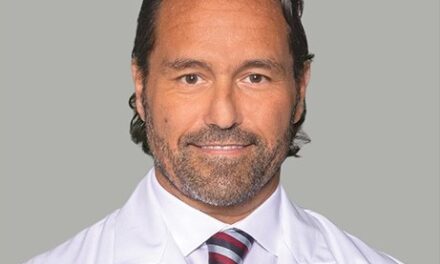
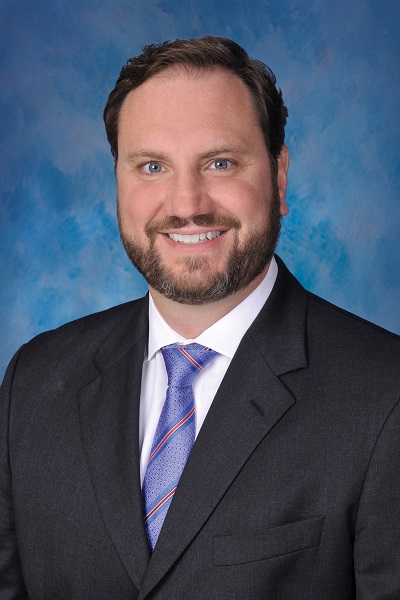
While medication after her diagnosis initially helped with Riaz’s symptoms, a series of falls that caused injuries underscored that drugs alone were not a long-term solution. That’s when she was referred to Dr. Christopher DeMassi, a neurosurgeon and chief of Memorial Neuroscience Institute. “I had lost everything and was crying,” said Riaz at that first meeting with Dr. DeMassi. “Please help me.”
Fortunately, Riaz was a candidate for Deep Brain Stimulation (DBS), a surgery Dr. DeMassi specializes in that delivers life-changing results for those with Parkinson’s disease and other movement disorders. During the procedure, with the patient under anesthesia, the surgeon implants electrodes in the parts of the brain where symptoms (tremors, stiffness/slowness, memory loss, etc.) are known to originate. While there can be some positive results from just the insertion alone, the real relief comes in the time following surgery when a small battery implanted under the skin and connected to the electrodes is activated, delivering electrical stimulation that minimizes the effect of abnormal brain activity and chemical imbalances that are inherent to movement disorders.
“We’re one of the very few centers that perform DBS robotically and while the patient is asleep,” said Dr. DeMassi. “They feel no pain during the surgery, which can be completed in under an hour, and the outcomes have been outstanding.”
Traditional DBS surgery, where a metal frame is screwed into the skull, can take up to ten hours to complete and is done while the patient is awake, which can be a very frightening experience. At Memorial, the robot-assisted procedure ensures more accurate electrode placement in areas where being even one millimeter off, or the size of a sharp pencil’s point, can impact a person’s functionality and whether the surgery is a success.
Riaz had her DBS surgery in early February and the positive impact was immediate. Her tremors were barely noticeable the next day and her speech improved. When the device was activated by Dr. Sadia Waheed, a Memorial neurologist, Riaz’s memory and ability to walk returned.
Today, the 54-year-old is a different person than she was prior to surgery. Riaz once again spends time with family and friends, and walks, cooks, and shops without assistance. “My recovery is an absolute miracle,” she says. “I am so happy and blessed that I got my life back.”