Program For RVTs Helping Hospital Staff and Patients
Atherosclerotic Vascular Disease (ASVD) includes disorders of the artery and veins that may lead to disability or death. The statistics for untreated ASVD including stroke, abdominal aortic aneurysm and pulmonary embolus are grim. For example, according to the Centers for Disease Control, stroke is the third leading cause of death in the United States. In 2002, stroke killed 162,672 people (61 percent of them women,) accounting for about 1 of every 15 deaths. More than 200,000 new Abdominal Aortic Aneurysms cases are diagnosed every year in the United States. If an aneurysm grows and ruptures, its fatal in 90 percent of the cases. Lastly, approximately 650,000 cases of pulmonary embolus annually in the US result in over 50,000 deaths.
The good news is that if vascular disorders are treated in time, most of these deaths may be avoidable, and physicians generally agree that early diagnosis and treatment of ASVD greatly impact the outcome of patient care.
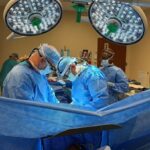
One of the greatest technological advancements for diagnosis of ASVD has been the application of noninvasive ultrasound. Ultrasound uses sound waves to provide critical images and blood flow information to the attending physician.

Richard Rizdon, first year RVT student at Nova Southeastern University
At the same time, ultrasound can be very “technologist dependent” requiring advanced knowledge and skills to operate the sophisticated and ever-evolving equipment. Yet, despite the wide acceptance and use of cardiovascular ultrasound, there is a major shortage of Registered Vascular Technologists (RVTs) due to the lack of qualified training facilities. For example, in the United States there are no more than 28 Commission on the Accreditation of Allied Health Education Programs (CAAHEP)-accredited cardiovascular training programs, only two of which are located in Florida. Nova Southeastern Universitys vascular sonography program is one of only three bachelor level programs available in the nation.
The typical applicant to the vascular technology program is a graduate of a community college who seeks to complete their bachelors degree in the allied health field. These applicants have completed most of their general education and sciences courses and many are focused on a career in the health sciences.
According to the US Department of Labor, the median income for a RVT in 2004 was $52,490, and the Bureau of Labor Statistics reports that employment of RVTs is expected to “grow much faster than average” (greater than 27 percent) through the year 2014. Growth will occur as the population ages, because older people have a higher incidence of heart problems and require the use of more diagnostic imaging. Employment of RVTs will also grow as advances in vascular technology and sonography help to reduce the need for more costly and invasive medical procedures.
“Using ultrasound systems, sonographers can use high speed computers to obtain clear two-dimensional images and detect the thickening of the arterial walls or blockages of the vessel lumen,” said Professor Terrence Case, NSU’s Vascular Sonography program director. “This diagnostic information helps the physician intervene and manage the patient’s health before a devastating stroke or ruptured aneurysm may occur.”
Nova Southeastern Universitys program was launched in March 2004. In addition to lectures in the classroom and hands-on experience in the new ultrasound laboratory, students spend 1,700 hours at a clinical site. The curriculum covers a variety of disciplines, and requires knowledge of vascular anatomy, physiology, comprehension of ultrasound physics, psychomotor skills to evaluate vessels and critical thinking skills to determine what might be significant for the interpreting physician. NSU expects to graduate at least 200 RVTs over the next 10 years and graduates will find exciting careers with excellent employment opportunities.