By Lois Thomson
“The basics stay the same, but the treatments keep changing.” That is the purpose behind the 41st Baptist Health Echo & Structural Heart Symposium, and the comment was made by Dr. Elliott J. Elias who, along with Dr. Damian F. Chaupin, is co-director of the symposium.
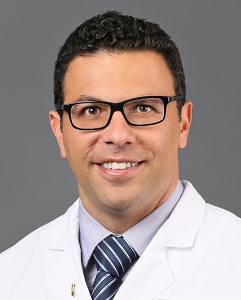
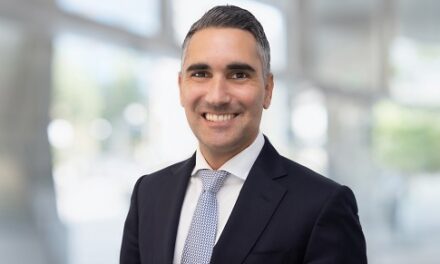
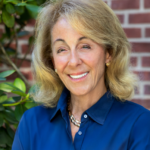
Dr. Elliott J. Elias
Dr. Elias, medical director of Cardiac and Structural Imaging at Baptist Health Miami Cardiac & Vascular Institute, said the conference is a way to get the community together and “educate them on all of the different topics that are important in cardiovascular disease.” He acknowledged that cardiology is changing rapidly: “With all the new advancements and techniques that companies are coming up with – more and better iterations of the devices they already have – what we were treating even last year has changed.”
Dr. Chaupin, cardiologist, Baptist Health Miami Cardiac & Vascular Institute, agreed. “People are living much longer these days, and valve disease has become so common, but now there are more new options than ever to treat it.” He concurred that the symposium is “to create more awareness in the community about valvular heart disease, structural heart disease, and interventions we can provide patients.”
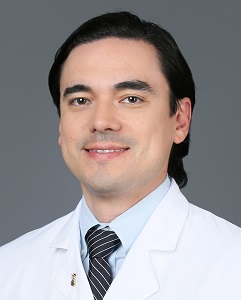
Dr. Damian F. Chaupin,
The two-day symposium is scheduled for September 27 – 28 at the Loews Coral Gables Hotel in Coral Gables, and according to Dr. Elias, topics will range from the core principles of echocardiography and the advanced imaging techniques that are important in the treatment of modern-day patients. “We have broken it down and we have a topic for the different valves – the aortic, tricuspid, Mitral. A sonographer will build the foundation for that topic on the valve disease and then we’ll talk to the structuralist – the person who does these transcatheter procedures – who will show difficult or complex cases they’ve done. Then we round it out with a surgeon’s view, so the audiences will hear different perspectives of when you would do surgery versus not.”
Dr. Chaupin will be lecturing on Artificial Intelligence and Echocardiography, which he said is of particular interest to him because of all the radical changes being seen now in computing. He said AI is starting to make its way more and more into radiology and the field of echocardiography each year. “We’re beginning to see AI tools help identify things we could never see before on our own.”
Dr. Elias will speak on a variety of topics: “My background is in imaging for transcatheter therapy, which basically is therapy for those patients who would be better suited to not go the surgical route. Transcatheter therapy, or what’s noted in our title, structural heart treatment, is planning imaging such as CT and Echo, and that’s what we’ll go over in the symposium. We will also go over the basics of diagnosing these diseases and how to treat them using the updated guidelines.”
According to Dr. Chaupin, the symposium is designed for cardiologists, but others in the community also have a great interest, such as primary care physicians who take care of these patients. “We used to have one patient being taken care of by one doctor, but now we may have several doctors who participate in the patient’s care. Their interest seems to be increasing, too, because a lot of people have never even seen some of the technology we’re using in the hospital.”
Dr. Elias added, “We have a lot of students within the community who are going to sonography school or have just graduated. This gives them a chance to come to a local symposium and learn different imaging techniques and learn about the valve disease they’re treating. They don’t realize how much care they’re involved in with these patients. So I think this highlights their importance and gives them a chance to learn from their peers, which is something I think is unique to our symposium, rather than just having general physicians talking about these things.”
The conference is expected to attract a large attendance, and Dr. Chaupin credits the speakers. “People will have a chance to listen to some of the great cardiologists at this conference – people who come from prominent institutions in the United States – who have been doing this for decades. They travel all over the world, and are involved in some of the biggest conferences given each year. So it’s great to see them all come together locally in Miami for us to listen to and have them provide more insight into structural heart disease.”
For more information about the symposium, visit https://cmeonline.baptisthealth.net/echo-symposium.