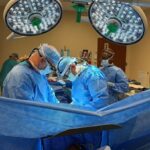
Construction projects, especially renovations, are a routine occurrence in today’s healthcare facilities. Despite how commonplace construction projects are, it is vital for the entire construction team to be cognizant of the responsibility they hold with patient lives. Construction activities have the potential to increase hospital-acquired infections (HAIs) due to contaminated dust and dirt particles that can easily travel through various means. A 2014 article published by The New England Journal of Medicine, cited the results of a national survey that concluded an estimated 722,000 cases of HAIs occurred in U.S. acute care hospitals. Additionally, about 75,000 patients with HAIs died during their hospitalizations. Although only a portion of those cases were directly linked to construction activities, it is the obligation of the construction team to implement every measure possible to reduce risks. For example, improper measures of infection control by the general contractor can lead to the dispersal of microorganisms such as Aspergillus fumigatus, a common type of mold, which can result in dire consequences for immunosuppressed patients.
Prior to commencing a project, the team should conduct an Infection Control Risk Assessment (ICRA) to determine the potential risks based on the surrounding patient population and based on the nature of the scope of work. Although it’s common to create temporary partitions to separate the work area from the active facility, it’s preferable to utilize specialty panels that eliminate the disruptive process of creating traditional temporary partitions. In addition, these specialty panels offer one-hour rated fire protection. Regardless of the separation of work activities, it may be necessary to take additional precautionary measures by using negative air machines within the work area. These machines create a negative pressure environment by constantly flowing air into the machine and thereby preventing airborne contaminants from escaping the workspace through any leaks or openings. The performance of these machines is logged by the general contractor daily to make sure that the pressure differential is correct.
When you consider the life-altering consequences that construction activities can have on patients, it is imperative to select a general contractor who has proven experience constructing within sensitive healthcare environments. Properly sealing air vents, maintaining negative pressure, using disposable coveralls and walk-off mats, are examples of the measures that an experienced contractor will take to prevent infections and patient discomfort.



 Construction projects, especially renovations, are a routine occurrence in today’s healthcare facilities. Despite how commonplace construction projects are, it is vital for the entire construction team to be cognizant of the responsibility they hold with patient lives. Construction activities have the potential to increase hospital-acquired infections (HAIs) due to contaminated dust and dirt particles that can easily travel through various means. A 2014 article published by The New England Journal of Medicine, cited the results of a national survey that concluded an estimated 722,000 cases of HAIs occurred in U.S. acute care hospitals. Additionally, about 75,000 patients with HAIs died during their hospitalizations. Although only a portion of those cases were directly linked to construction activities, it is the obligation of the construction team to implement every measure possible to reduce risks. For example, improper measures of infection control by the general contractor can lead to the dispersal of microorganisms such as Aspergillus fumigatus, a common type of mold, which can result in dire consequences for immunosuppressed patients.