The outlook for people with cancer is changing rapidly — and has never been more positive. We’re proud to have partnered with colleagues throughout South Florida and across the nation to find answers for patients — and their loved ones — struggling with a cancer diagnosis. A referral to the Thoracic Surgery and Lung Center of Excellence at Jupiter Medical Center provides an entire system of care designed to ensure each patient receives the evaluation and treatment needed and the attention of a team of dedicated physicians and support professionals.
.jpg) “Treatment of lung cancer at Jupiter Medical Center combines the best of everything, including thoracic surgeons experienced in the latest minimally invasive techniques, cutting-edge robotic technology and multidisciplinary collaboration across disciplines and fields of study,” said Dr. K. Adam Lee, the center’s medical director.
“Treatment of lung cancer at Jupiter Medical Center combines the best of everything, including thoracic surgeons experienced in the latest minimally invasive techniques, cutting-edge robotic technology and multidisciplinary collaboration across disciplines and fields of study,” said Dr. K. Adam Lee, the center’s medical director.Leading the Way in Robotic Thoracic Surgery
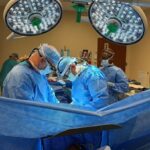
Jupiter Medical Center was one of the first facilities in the world to offer the da Vinci® Xi™ System, a sophisticated robotic platform for complex surgical procedures using a minimally invasive approach. The da Vinci Xi™ Systems consist of an ergonomic surgeon’s console, a patient-side cart with four interactive robotic arms, a high performance 3D/HD vision system, and proprietary EndoWrist® instruments with Intuitive® motion.
Dr. Lee was the first in the nation to perform a robotic pulmonary lobectomy with a four-arm robot nearly two decades ago. He remains a pioneer in robotic thoracic procedures. He has traveled across the nation teaching cardiothoracic surgeons the technique. In addition, surgeons travel to Jupiter Medical Center to receive advanced training in robotic surgical techniques.
Multidisciplinary Conferences and Clinics
Weekly thoracic multidisciplinary cancer conferences are what set Jupiter Medical Center’s Thoracic Surgery and Lung Center of Excellence apart from other programs. Each conference is attended by medical oncologists, radiation oncologists, surgeons, radiologists, pathologists and other specialists who share ideas and knowledge, and collaborate to determine the best course of action for each patient. Multidisciplinary cancer conferences aren’t new, but they’re typically found only in large academic medical institutions.
“Research shows that cancer conferences enhance clinical decision making and directly influence patient care,” Dr. Lee said. “It’s especially beneficial to have this collaboration among specialists when we are dealing with the more complex cases. If I were a patient, I would want as many experts talking about my case in a multidisciplinary setting as possible.”
As an added measure, when the specialists consider it appropriate, cases are processed through the IBM Watson for Oncology computing system, a tool that assists in identifying evidence-based treatment options. In addition, Jupiter Medial Center uses IBM Watson for Clinical Trial Matching, a comprehensive management system for cancer research. The platform enables clinicians to identify clinical trials for eligible patients.
Jupiter Medical Center’s Thoracic Multidisciplinary Clinic (MDC) offers innovative diagnostic and therapeutic strategies specific to each individual patient’s diagnosis to expedite development and implementation of a treatment plan. The clinic brings together a multidisciplinary team of specialists in thoracic surgery, medical oncology and radiation oncology with collaboration from pulmonology, pathology, and radiology physician specialists to evaluate the patient, review diagnostic testing and discuss the patient’s case to determine the best course of action for treatment. In a single visit, treatment plans can be developed that meet each patient’s unique needs. A support team—including an oncology social worker, a licensed clinical dietitian, cancer rehabilitation specialists, and a clinical research nurse—also is part of the clinical process.
“When other health care professionals entrust their patients to our care, everyone benefits from our drive to deliver the best outcomes possible,” Dr. Lee said.