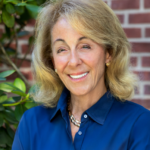
According to Jean Seaver, many people think that when nurses graduate from nursing school, they have all the training they need to go into specialty areas – whether working in the recovery room, in surgery, the operating room, or in other capacities. She pointed out, however, "They don’t. They require a lot of advanced training and credentialing to get to those levels for critical care." And Seaver is the one who can help get them there.
Seaver, Associate Vice President of Learning and Development at Broward Health, said her position in the Department of Learning has three components: clinical education programming, which includes clinical training/in-service education to keep practice knowledge and skills up to date, advanced clinical content to prepare nurses and other professionals for roles in the ED and OR; staff education and leadership development through Broward Health Leadership University, for developing future leaders for succession planning; and workforce development, which focuses on maintaining high-quality relationships with Broward Health’s academic partners to provide clinicals and attract new talent for the workforce pipeline.
Seaver expanded on those components by saying, for example, that Broward Health operates a virtual, high-fidelity simulation hospital to enable clinical staff to gain more proficiency in certain situations. "We have the caregivers perform through evidence-based, computer-based scenarios with mannequins that are lifelike, so they can get experience managing issues like strokes, cardiac arrest, or internal hemorrhages. This provides a safe environment to gain necessary skills for proficiency."
The clinical education function oversees and manages the nurse residency program, which includes considerable clinical training. "If we hire nurses and they want to become an ER nurse or a critical care nurse or an OR nurse, we manage that training for them. A lot of developing nursing skills and competencies are needed to manage the care of acute-care patients across different levels of care in our system."
Also involved is a large Learning Management System, in which compliance modules are built to meet all types of regulatory compliance at the corporate level. "Healthcare is the most regulated environment you’re going to find, because we have state regulations for licensing, regulatory body standards that include management of biomedical waste, electrical safety issues, patient safety, radiation – there’s a lot of training that has to go on behind the scenes to meet those requirements on an annual basis."
In addition to her responsibilities at Broward Health, Seaver serves on the board of the Nursing Consortium of Florida. Previously the board secretary, she is currently president-elect for the next two years, and will serve as president for two more after that. Seaver said, "The Consortium has a mission to educate the public on the purpose and importance of nursing and nursing education, and it also serves as an education forum." She chairs the educational conference planning committee, and said the purpose of the two annual conferences is to connect everybody in South Florida to what’s happening – what they can do together, what the solutions are, and how to share that information. "We are also going to look at other matters , such as how to change our approach to educating nurses, given with what happened with the pandemic challenges."
COVID did indeed cause an upheaval in all facets of life, especially the medical field, and Seaver agreed: "Education has been disrupted. We need to find more support for our clinical coaches – provide the new graduate clinical staff more orientation time, more access to simulation to gain more skills." She said Broward Health’s Chief Medical Officer was extremely supportive in the early return of clinical students to the hospital setting to continue their clinical training. They returned earlier than many other hospitals allowed. "By doing that, he enabled us to bring them back to continue training with the appropriate PPE and other safety needs; he understood we have to get the students back to get them prepared to pass their licensing exams so they can be hirable and be a future part of the healthcare team."
However, once the students returned, they had to be apprised of the changes. "Medical science was changing by the month. You can see that with the guidance the CDC gave us with COVID precautions. We were constantly updating education materials; it’s a communications methodology to keep people current to enable them to be effective in meeting the mission of Broward Health, which is to provide quality care to the population we serve, and make a difference in this county."
Seaver summarized by saying, "I encourage people to go into education. People often want to be clinical nurses, they want to be advanced registered nurse practitioners, but education is the foundation that helps these people to grow and develop. In my department, I’ve hired people who started their careers as nursing assistants; then they went back to school and became an LPN, became an RN, got an associate degree, then got their bachelor’s degree, then their master’s, and then they were educators and moved on to become nurse managers and Chief Nursing Officers. Education is a wonderful opportunity to help and see people grow."