

By Vanessa Orr
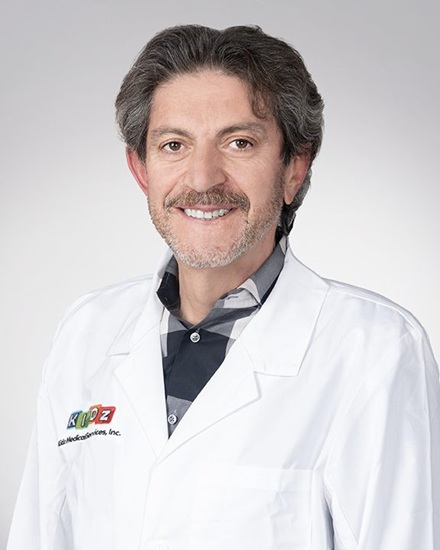
While treating young cancer patients can be challenging, KIDZ pediatric oncologist Dr. Doured Daghistani says the rewards of this career are immeasurable.
“When people ask me what I do for a living, and I say that I treat kids with cancer, they say, ‘I’m sorry,’” he explained. “But what they don’t understand is that the most common pediatric cancer—leukemia—has a 95 percent cure rate. The majority of kids are doing well these days, thank God.”
Dr. Daghistani, who cares for patients at both Miami Cancer Institute and Nicklaus Children’s Hospital, notes that survival rates today are far higher than in the past. The 69-year-old, who has been practicing pediatric hematology/oncology since 1986, credits this to innovations in pediatric cancer care.
“Back in 1965, when I was 8, I was watching a movie where the child was diagnosed with leukemia, and the doctor told his parents that the child had six months to live and that there was nothing he could do,” recalls Dr. Daghistani. “Now, when I tell parents that their child has leukemia, I can tell them that 95 percent of these children will be long-time survivors. That’s a major difference.”
In the past, childhood cancer was treated in three ways: with surgery, radiation, and chemotherapy. Unfortunately, even if the child survived, side effects could prevent them from living a “normal” life. Today’s treatments not only aim to improve mortality rates, but also to decrease morbidity, or the side effects of treatment.
“This is especially important in kids with brain tumors, because the brain is still developing,” said Dr. Daghistani. “If the brain is damaged as a result of radiation therapy, it becomes a long-term problem. Today, we’re seeing the side effects of treatments that took place 15 years ago.”
One of the latest innovations in treating childhood cancer is proton therapy, which does not cause long-term brain damage. Proton therapy uses highly precise radiation beams to target pediatric tumors, sparing healthy tissues better than traditional X-ray therapy. This significantly reduces long-term side effects like developmental issues, growth problems, and secondary cancers, and is ideal for use in brain, head/neck, and spinal tumors.
Another innovative modality, targeted therapy, helps identify cancers with specific genetic/biologic markers. Targeted therapy is a form of precision medicine that uses drugs to attack specific genetic changes (mutations) in childhood tumors, moving beyond broad chemotherapy to more focused, less toxic treatments.
Immunotherapy is also being used to decrease morbidity and increase survival.
“The immune system polices the body 24/7 and attacks abnormal cells,” said Dr. Daghistani. “Before, when a child got cancer, it meant the immune system failed. Now, we’re using the child’s own immune system to fight cancer, and we’ve made significant advancements in the last 10 years, especially in treating acute leukemia.”
Treatments include CAR T-cell therapy (reprogramming T-cells to attack tumors) and using targeted antibodies.
“It’s really amazing that in the 1980s, we discovered that leukemic cells had abnormal chromosomes and genes, but we didn’t yet have human genome mapping,” said Dr. Daghistani. “It took 10 years and $100 million to finally know what genes were in the body. Now we can identify cancer genes and biomarkers, enabling targeted and immunotherapy.”
Dr. Daghistani, who attended medical school at the University of Damascus, Syria, and completed his residency and fellowship at the University of Miami/Jackson Memorial Hospital, has been with KIDZ Medical Services for the past four years. He appreciates that the company is owned and operated by physicians who have worked in the medical field for decades.
“You very rarely see doctors and medical practices led by physicians; they are often led by people who do not fully understand medicine,” he said. “KIDZ has an amazing executive team and a very comprehensive team overall.”
He also appreciates that he works in a field where he can witness advancements saving children’s lives.
“Years later, when I see my patients as adults with their own children, there’s no way to explain how that feels,” he said. “There are simply no words to describe it.”