The Barry University Center for Community Health and Minority Medicine recently opened as the new physical facility housing the School of Podiatric Medicine and the graduate Physician Assistant Program. The center provides the school with an increased capacity to attract and train medical students from diverse backgrounds and enables the school to serve the medical needs of the medically underserved populations of South Florida, the state, and the nation.
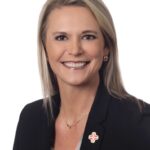
Q&A with Dr. Chet Evans, D.P.M., Dean for the School of Podiatric Medicine, Barry University
How will the Center improve education and training opportunities for careers in medicine?
Dr. Evans: The Centers central mission is to train the next generation of health professionals to provide health care for the many minority and medically underserved communities of South Florida. The Center will serve more than 400 health professional students with two state of the art classrooms and a new physical assessment lab with a full range of diagnostic equipment. The Center has offices and meeting rooms for the faculty and staff of the School of Podiatric Medicine and the Physician Assistant Program.
There has been one new podiatric school opened in Arizona and another school will open in 2009. What does the future look like for a career in podiatric medicine?
Dr. Evans: Yes, the newest podiatric medical school will open at Western University of the Health Sciences in Pomona, California in fall 2009. The future looks very bright for podiatric physicians who now provide 40 percent of all foot related health services in the United States. The U.S. Bureau of Labor Statistics projects job growth of about 16 percent in podiatric medicine between 2004 and 2014. The Podiatric Medicine Workforce Study, conducted by the Center for Health Workforce Studies in the School of Public Health at the State University of New York at Albany, suggests that the per capita demand for podiatric physicians will increase dramatically as the population ages, due to the greater risk of foot problems among the elderly and the U.S. health crisis created by the surge in rates of diabetes and obesity. Just to increase the supply of doctors of podiatric medicine (DPMs) sufficiently to keep pace with population growth podiatric medical schools would have to nearly triple their production of graduates. Moreover, to meet the increasing demand for foot care services generated by the increase in the elderly population and expected increases in obesity and diabetes, an even more dramatic increase in podiatric graduates would be needed.
Describe career opportunities in medicine in the State of Florida.
Dr. Evans: Two new allopathic medical schools recently opened at the University of Central Florida in Orlando and Florida International University in Miami. The opening of the two schools is to help address the nationwide shortage of physicians, especially in Florida. With the increased aging of the population and the large influx of immigrants, there is a health care professional manpower crisis. In addition, there is a lack of residency training programs in Florida. Unfortunately, after graduation many allopathic physicians are forced to train out of state and often end up practicing there. Because of the shortage of physicians, is an increasing demand for other primary care health professionals, including physician assistants and nurse practitioners. The expansion of the School of Podiatric Medicine and Physician Assistant Program at Barry University is governed by each programs accrediting body. The availability of resources to train students determines the ability to expand educational programs.
Why is medicine a great career choice?
Dr. Evans: There is a tremendous need for physicians and primary care health professionals of all types both in Florida and nationally. When the economy is in a downturn, there is usually an upswing in the number of applications to medical school. Medical students report feeling like they can control their own destiny when asked why they apply during hard economic times. Florida has one of the highest rates of diobesety, the combined epidemic of diabetes and obesity. Physicians and other primary care practitioners are needed to care for the many chronic illnesses associated with these two diseases including kidney disease, hypertension, gangrene, non-healing wounds, and vascular disease, among others. In addition, primary care practitioners are needed to promote health education and disease prevention. At this time, health education and disease prevention is just as important as treatment. I highly advise students seeking a career to help others and to achieve a stable economic lifestyle, to choose the field of medicine.
Post Views: 998