Paddling his surfboard through the blue waters of the Atlantic Ocean, Jason Stabley, D.O., appreciates the science behind the wave hes about to ride. He can picture the wave developing, gathering energy as it travels countless miles to this point, rising to a crescendo that he rides to its finish.
It is that same interest in the science of how things work that drew Dr. Stabley, medical director of neuroscience services at Martin Memorial, to medicine.
“Neurology is like a fascinating puzzle you cant put down finding each piece one by one until the puzzle is complete and the picture becomes clear,” he said. “Most things make sense in neurology. I find it fascinating that, through taking patients history and examining them, abnormalities can be localized quite precisely.
“The past decade has been considered by some to be the decade of the brain because so much research is happening. That interests me because its never boring or mundane. New information is learned in neurology every day.”
That was certainly true in 2007, when Dr. Stabley helped Martin Memorial earn certification as a primary stroke center from The Joint Commission.
“Were offering patients the most advanced care, while at the same time it keeps us on our toes,” he says. “Our goal is to not only treat stroke to the best of our ability, but to provide the community with education that can help prevent stroke as well.”
While stroke may be one of the most common neurological ailments afflicting Americans, other diseases such as Alzheimers and Parkinsons are being researched for improvements in diagnosis and treatment.
“As people are living longer, these neurodegenerative diseases are becoming more common,” Dr. Stabley said. “But there is a sense of optimism, with all the research that is being done, that there could be big breakthroughs for the diseases.”
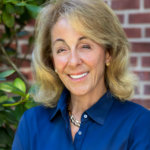
Genon Wicina, M.D.
As a pediatrician, Genon Wicina, M.D., has seen a rise in childrens health issues that were rare just a few years ago. Diseases such as Type 2 diabetes, high blood pressure and heart disease are now striking younger age groups at an alarming rate.
“There is an epidemic of obesity in America,” said Wicina a pediatrician at Martin Memorial Health Systems and mother of two. “Parents need to be more conscious of what theyre buying for their children. While children may be educated about healthy lifestyles at school, parents also need education and tools to help them make healthy decisions for their families.”
Dr. Wicina is a supporter of the National Heart Lung and Blood Institutes We Can! program (Ways to Enhance Children’s Activity and Nutrition). This national program is designed for families and communities to help children maintain a healthy weight.
Prevention is a key to solving this problem and Dr. Wicina is passionate about providing the community with the information it needs to help children avoid long-term health problems. Her efforts have gone a long way toward helping reduce the obesity epidemic on the Treasure Coast.
Along with her work with the We Can! program, Dr. Wicina also has spoken at community forums such as the “Heart of a Woman” event sponsored by Martin Memorial in February. There, she talked to the crowd of approximately 200 women about the steps they can take with children now to prevent heart disease when they become adults.
“If their child is overweight, it is important for the parents to initiate a family lifestyle change that incorporates increased activity with healthier nutrition,” she said. “The parents must act as role models and include the entire family in this change, ensuring that no one is singled out.”



 Jason Stabley, D.O.
  Genon Wicina, M.D.
As a pediatrician, Genon Wicina, M.D., has seen a rise in childrens health issues that were rare just a few years ago. Diseases such as Type 2 diabetes, high blood pressure and heart disease are now striking younger age groups at an alarming rate.
“There is an epidemic of obesity in America,” said Wicina a pediatrician at Martin Memorial Health Systems and mother of two. “Parents need to be more conscious of what theyre buying for their children. While children may be educated about healthy lifestyles at school, parents also need education and tools to help them make healthy decisions for their families.”
Dr. Wicina is a supporter of the National Heart Lung and Blood Institutes We Can! program (Ways to Enhance Children’s Activity and Nutrition). This national program is designed for families and communities to help children maintain a healthy weight.
Prevention is a key to solving this problem and Dr. Wicina is passionate about providing the community with the information it needs to help children avoid long-term health problems. Her efforts have gone a long way toward helping reduce the obesity epidemic on the Treasure Coast.
Along with her work with the We Can! program, Dr. Wicina also has spoken at community forums such as the “Heart of a Woman” event sponsored by Martin Memorial in February. There, she talked to the crowd of approximately 200 women about the steps they can take with children now to prevent heart disease when they become adults.
“If their child is overweight, it is important for the parents to initiate a family lifestyle change that incorporates increased activity with healthier nutrition,” she said. “The parents must act as role models and include the entire family in this change, ensuring that no one is singled out.”
Genon Wicina, M.D.
As a pediatrician, Genon Wicina, M.D., has seen a rise in childrens health issues that were rare just a few years ago. Diseases such as Type 2 diabetes, high blood pressure and heart disease are now striking younger age groups at an alarming rate.
“There is an epidemic of obesity in America,” said Wicina a pediatrician at Martin Memorial Health Systems and mother of two. “Parents need to be more conscious of what theyre buying for their children. While children may be educated about healthy lifestyles at school, parents also need education and tools to help them make healthy decisions for their families.”
Dr. Wicina is a supporter of the National Heart Lung and Blood Institutes We Can! program (Ways to Enhance Children’s Activity and Nutrition). This national program is designed for families and communities to help children maintain a healthy weight.
Prevention is a key to solving this problem and Dr. Wicina is passionate about providing the community with the information it needs to help children avoid long-term health problems. Her efforts have gone a long way toward helping reduce the obesity epidemic on the Treasure Coast.
Along with her work with the We Can! program, Dr. Wicina also has spoken at community forums such as the “Heart of a Woman” event sponsored by Martin Memorial in February. There, she talked to the crowd of approximately 200 women about the steps they can take with children now to prevent heart disease when they become adults.
“If their child is overweight, it is important for the parents to initiate a family lifestyle change that incorporates increased activity with healthier nutrition,” she said. “The parents must act as role models and include the entire family in this change, ensuring that no one is singled out.”