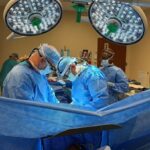
When it comes to surgery, advances in technology have provided breakthroughs in less invasive approaches that are beneficial to patient outcomes and recovery time. And, although laparoscopic, or minimally invasive, surgery has been around for more than 30 years, it is constantly being improved upon, resulting in better patient care. In fact, the minimally invasive surgery (MIS) market has a projected potential of $16.4 billion in the United States and it is predicted to expand at a compound annual growth rate (CAGR) of 8.3% between 2009 and 2014.
Two of the more recent and significant game changers in the world of laparoscopic surgery have been the invention of surgical robots and the development of D-H.E.L.PTM – a cleaning/defogging device that keeps the lens at the end of a laparoscopic and robotic camera clear. The acronym stands for Defogging Heated Endoscopic Lens Protector.
Prior to the launch of this technology in 2007, surgical teams struggled to find ways to keep the robotic and laparoscopic camera lens clear and defogged. Because the scopes were cold, once inside the patient’s warm body the lens would fog up. When that happened, surgeons often had to stop the operation to allow their staff the opportunity to treat their camera lens with warm water so they could see clearly. This not only prolonged the operation, but over time, the camera lens deteriorated from the handling, cleaning and wiping off the lens resulting in an increased repair and replacement cost to the hospital.
But thanks to the New Wave Surgical innovative system, surgeons who perform laparoscopic procedures can enhance operating room efficiency, which can shorten operative time and subject the patient to less anesthesia.
The founder and president of the company once had aspirations of being a doctor. In fact, he was well on his way when he came up with the technology in a medical school dorm room five years ago that uses a battery-powered heating system and antifogging fluid to keep the laparoscope clear of debris and fog.
New Wave Surgical received FDA clearance in October 2006 and the product was launched commercially in October 2007. The cutting-edge lens cleaner was then analyzed and reviewed by the medical editor of Obstetrics and Gynecology who gave the device a perfect “5” score in design and functionality. It is now being used in more than 500 hospitals around the world. It is on track to be used in more than 300,000 surgical procedures in 2012.
As a specialist in laparoscopic and colorectal surgery who has performed more than 1,000 surgeries and who has been in practice for many years, I know how body fluids and tissues can collect on the camera lens during surgery, but with D-H.E.L.PTM the warmed anti-fogging solution breaks down fats and washes it away from the lens in just seconds. It also helps shorten operating room time, allowing surgical staff and nurses to stay near the patient instead of having to step away to remove debris from the camera lens.
With the number of laparoscopic procedures growing exponentially every year, the need for new, innovative and cost effective technology to assist in such procedures is of paramount importance. Advancements in technology are the key to improved patient care for all medical professionals. The more products like D-H.E.L.PTM that come to market, the better it is for surgeons, nurses, surgical technicians and, most importantly, for patients. They help us get the job done quickly and accurately and improve patient outcomes.