.jpg) The one undeniable result of healthcare reform is that the industry will be permanently changed by regulators and the public’s demand for increased accountability and transparency. The predominate trend for nursing will be stepping up and assuming a major role in creating and monitoring systems and processes that will make that possible.
The one undeniable result of healthcare reform is that the industry will be permanently changed by regulators and the public’s demand for increased accountability and transparency. The predominate trend for nursing will be stepping up and assuming a major role in creating and monitoring systems and processes that will make that possible.Nursing is traditionally considered a cost center in a hospital’s labor force consuming as much as 40 percent of a hospital’s direct care budget. As quality of care and outcomes play a greater role in driving reimbursement and provider decisions, the paradigm of how nursing is viewed will shift and nurses will be recognized as major players in affecting outcomes.
There are several indices of quality that are “nurse sensitive.” Let’s consider the area of pressure ulcers. While there is evidence that not all pressure ulcers are preventable, available evidence suggests that they are “reasonably preventable.” Medical errors such as hospital-acquired pressure ulcers are directly impacted by how well nurses assess the patient’s skin on entry to assure: they are not present on admission (POA); the degree to which nurses evaluate each person’s risk factors; and the vigilance of nurses that prevention strategies are reliably executed.
Efficient system design, appropriate staffing and material resources are critical to assuring highly reliable nursing care and monitoring. The value of nursing’s contribution to reducing error and patient complications will impact the hospital’s reputation and financial health as reimbursements and penalties are increasingly tied to organizational performance.
It Starts At the Top: Hospital boards, senior leadership and administrative teams must come to the consensus that quality outcomes and system efficiencies impact finances. Hospital-acquired conditions increase length of stay and utilization of hospital resources. Poorly designed systems create re-work, waste and inefficiencies.
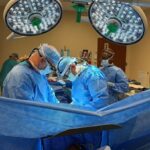
Everyone Must Have a Voice: At Holy Cross Hospital in Fort Lauderdale, nurses lead the Surgical Safety Check List and time out. More than ever before, the importance of medicine as a “team-sport” is clear. Physicians and other health care providers make wiser choices and decisions when they are open to diverse and independent inputs from others on the health care team. This means listening to our patients, and to other care providers that have much to contribute to assure mistakes are not made.
A Culture of Safety: The Joint Commission’s Universal Protocol represented a significant effort to reduce wrong site, wrong patient surgeries in hospitals. The effectiveness of the “Time Out” concept is likely to be related to the organizational cultures within which time outs take place. Often a person with less positional power and rank within a traditionally hierarchical system is called upon to “stop-the-line,” in the face that something might not be right. Cultures that have a double-standard, one for physicians and one for other less powerful associates, will have considerable challenges in reducing patient harm and improving safety. Care providers must feel emotionally safe to put voice to these concerns even when doing so questions the care rendered by those with more position power. Medical errors often occur due to ineffective teamwork and team communication.
System and Process Improvements: Organizations have a choice when error resulting in patient harm occurs. They learn from defect or they can blame. It is easy to blame someone when an error occurs but often it is the result of poorly designed systems. Systems must be nimble enough to incorporate new learning or risk becoming outdated, inefficient, redundant and broken. It is important to recognize these failings, learn from defect, identify waste and inefficiencies and engage nurses, physicians, and other clinical professionals, in process and system redesign so that our patients can receive the reliable, high quality care they deserve.