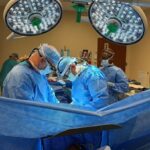
If you are having heart problems, your doctor may recommend that you have a cardiac catheterization procedure to diagnose or treat your heart condition. “Cardiac catheterization involves threading a long, thin flexible tube through an artery or vein to the heart,” says Robert Carida, M.D., an interventional cardiologist at Delray Medical Center. “The procedure may be performed for a variety of reasons, such as diagnosing or evaluating coronary artery disease, congenital heart defects, or heart valve problems, as well as identifying causes of heart failure or cardiomyopathy.” Preparing for cardiac catheterization begins the night before the procedure. You will probably be asked not to eat or drink anything after midnight. “Before the procedure, check with your doctor if you are taking any medications, especially blood-thinning or antiplatelet prescriptions,” reminds Dr. Carida. In the catheterization laboratory, or cath lab, you will lie on an examination table and electrodes (small metal disks), which are attached by wires to an electrocardiogram machine, will be placed on your chest to monitor heart rhythm during the test. You will be given a sedative before the cardiac catheterization to help you relax but will remain awake during the 30- to 60-minute procedure. The area where the catheter is inserted is numbed and a small incision is made into a blood vessel usually in the arm or upper thigh.
Special X-rays are taken as the catheter and guide wire are gently threaded to the proper place in the heart to perform necessary tests or treatments. You may feel some discomfort at the incision site or from having to remain still for an extended period of time. A special dye may be administered through the catheter to allow your doctor to see how well your heart is pumping. Your doctor also could use the catheter to take blood samples from different areas of the heart or to perform minor heart surgery. If there are blockages in the arteries, your doctor may perform an angioplasty to improve blood flow. After the procedure is finished, the catheter is removed and the incision site is closed and bandaged. Usually you can return home the same day as the procedure. You may feel some tenderness or soreness for about a week.
“Cardiac catheterizations are performed frequently and rarely cause serious problems or complications,” concludes Dr. Carida.