
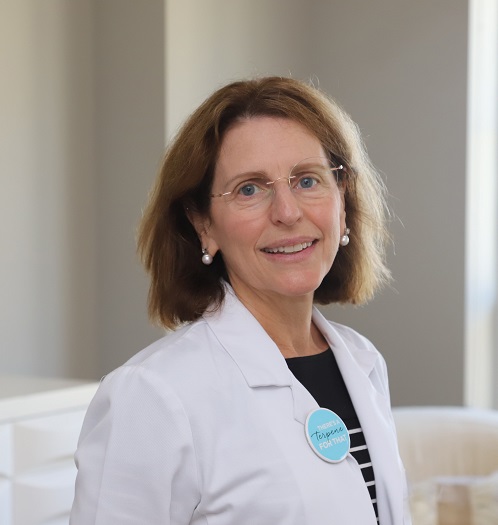


By Melanie Bone, MD, FACOG
There are 749,604 qualified patients with active medical marijuana ID cards in Florida as of the September 9th weekly update from Florida’s Department of Health, Office of Medical Marijuana Use. While that department does not release statistics, the 2020 National Survey of Drug Use and Health reported that the proportion of adults 65 or older who reported recent cannabis use jumped by 18 percent.
In 2019, MorseLife Health System became the only senior living provider authorized by the State of Florida to offer cannabinoid-based therapies for its clients in a variety of care settings including independent living, assisted living, short term rehab, memory care and hospice. I offer the following overview of current trends and issues.
Access
Florida rule 64-4.011, F.A.C. requires all patients and caregivers to have a Medical Marijuana Use Registry identification card. Patients must be recertified every 210 days and renew their ID card annually. Elderly caregivers of another must also be approved and a patient wishing to serve as a caregiver must apply separately for a caregiver card and a patient card.
This can create hurdles for seniors who are not active or living independently. Many of those do not have the necessary valid driver’s license or photo ID listing their current address to successfully apply.
The largest barrier to access for elders in assisted living or depending on caregivers is that medical marijuana is still illegal according to the Federal Government and has not been cleared by the Food and Drug Administration. Therefore, it cannot be offered as any part of care subsidized by Medicare and Medicaid.
Boomers
There has been a large uptick in the number of baby boomers utilizing cannabis products for medical purposes. In fact, an April survey of Medicare recipients by Medicare Plans reported that one in five currently use medical marijuana. Given the access barriers discussed above, there is an age divide with younger boomers and older patients.
Conditions
When cannabinoid therapy works it does a very good job and people want to continue. Many of our patients who started with us are still utilizing it while some who stopped have resumed noting its health benefits.
In Florida, conditions that qualify are cancer, epilepsy, glaucoma, HIV, AIDS, PTSD, ALS, Crohn’s disease, Parkinson’s disease, MS, anxiety, a terminal condition, and chronic nonmalignant pain arising from and extending beyond one of these conditions.
While we don’t have the typical double-blind research studies to rely upon, millions of data points are giving us a much better understanding of how to use cannabinoid treatments.
We are seeing a shift from conditions such as Parkinson’s to lifestyle usage for anxiety and sleep disorders. Patients in memory care receiving cannabinoid therapies appear to be calmer with reduced sundowning. Encouragingly, our data points are revealing at least a 50% reduction in use of other medications that patients were taking for their conditions.
Dosing
I have added D – dosing – to my ABC’s as it may be the greatest difference between the older population and younger users. Seniors are very uncomfortable with self-medicating and want to control what and how much they take.
Doctors cannot prescribe medical marijuana and budtenders at dispensaries are not physicians. Seniors are faced with a wide variety of products with different potencies and delivery systems from old-fashioned joints to vape cartridges, topical, edible and oral options. While many older patients prefer CBD products or a ratio of CBD to THC, these products are not widely available.
Every patient’s experience will be different and, more often than not, patients are left to experiment on their own to find the optimum dosage and product.
Practitioners must continue to educate themselves. Like any specialty, there is a learning curve regarding products, providers, what helps people and what to avoid. Medical marijuana has tremendous power to help seniors but needs to be ordered with a provider’s guidance.
Dr. Melanie Bone directs the Living Learning Lab at MorseLife Health System in West Palm Beach.






















