


By Daniel Casciato
When Jenelle Naar was diagnosed with Stage 3 breast cancer just after her 21st birthday, her world turned upside down. What followed was a whirlwind of PET scans, CT scans, biopsies, chemotherapy, and radiation, all within just a few months.
“I noticed a lump and of course I contacted my doctor right away,” she says. “They told me, ‘You know, this could be worrisome because you’re so young and we’re looking out for you, but we’re not quite sure what it is.’”
The mass continued to grow. By the time it was fully evaluated, it made up nearly 90% of her right breast, about the size of a baseball.
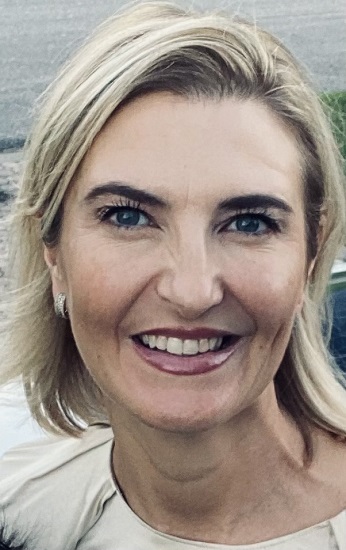
Dr. Erica Bloomquist
Jenelle’s story is becoming increasingly common, and that alarms clinical experts like Dr. Erica Bloomquist, a breast surgical oncologist at Memorial Cancer Institute. “Breast cancer in young women is a whole different beast, so to speak,” she says. “It presents with a usually more advanced stage of disease, a more aggressive subtype such as triple negative or HER2-positive.”
A Rising Trend Among Young Women
National data has confirmed what oncologists at Memorial are witnessing on the ground: more young women are being diagnosed with breast cancer, and often at more advanced stages. While the disease remains more prevalent among older populations, the number of women under 40 facing this diagnosis is steadily increasing.
Dr. Bloomquist points to multiple factors driving this trend. “We live in a world where we’re constantly being bombarded with things that damage our DNA,” she says. “Also, things that stimulate breast tissue to be more prolific, like increased estrogen related to obesity. Thirty percent of our youth being obese means more estrogen, more stimulation of the breast cells, in combination with an environment that’s constantly damaging our bodies.”
She adds that alcohol consumption and hormonal changes may also increase the risk.
Misdiagnosed or Missed: The Awareness Gap
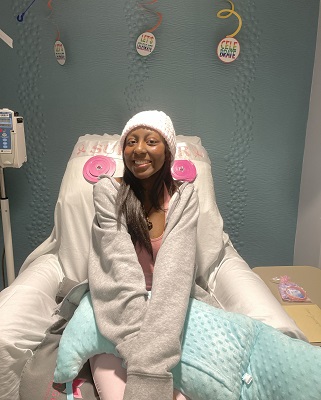
Jenelle Naar
For many young women, a breast cancer diagnosis is delayed simply because no one—including their doctors—expects it.
“When you’re in your twenties or teens, you don’t think about breast cancer,” Dr. Bloomquist says. “You have cysts and hormonal changes that cause your breasts to swell or feel sore. So, when you notice something different, you think, ‘It’s just my cycle.”
Often, providers are also slower to suspect cancer in young women. “It takes time and trial and error to figure out, hey, this isn’t some benign process. This could be breast cancer, and we need to work it up.”
Unique Challenges: Fertility, Finances, and Emotional Fallout
Being diagnosed at 21 or 25 presents challenges that older patients may not face. “There’s so much that comes into play when you’re in your twenties or early thirties,” Dr. Bloomquist says. “You’re thinking about your future—school, your career, starting a family. Breast cancer is the furthest thing from your mind.”
Young patients often grapple with fears about fertility, relationships, and career interruptions. “Chemotherapy and certain medications can damage the ovaries,” she explains. “Maybe they have a gene mutation they don’t want to pass on. We have to think about fertility preservation early, and that window is narrow.”
At Memorial, fertility preservation has become a key priority. “The window to have fertility conversations and preservation coordination is very narrow as we want to start treatment right away,” says Maray Salina, MSN, APRN, FNP-BC, director of oncology support services. “Memorial Cancer Institute has a team of patient navigators that provide education, screening, and are able to connect patients to resources for fertility preservation.”
She explains that these patient navigators also assist with grant applications and even offer financial support through the Memorial Foundation. These services were a central theme at a recent event hosted by Memorial for young breast cancer patients, where attendees emphasized how essential it was to have early conversations about fertility options.
The emotional and psychological weight can also be overwhelming. “You need someone who specializes in psychology related to cancer,” Dr. Bloomquist says. “There’s so much angst when you’re young, and then you throw this into the mix.”
Career development, education, and financial stability are often jeopardized. “How do we prevent them from being hundreds of thousands of dollars in debt when they’ve just started their life?” she asks. “Financial toxicity is real.”
Genetics and Prevention
Genetic testing plays a more prominent role in younger cases. “We’re more likely to find mutations like BRCA1, BRCA2, PALB2, CHEK2, and others in this population,” Dr. Bloomquist says.
Still, the majority of young women with breast cancer don’t have a family history. “That’s why it’s so surprising for them and another reason they may not take changes seriously at first.”
She recommends that young women prioritize breast awareness over traditional self-exams. “As you’re showering, notice the overall contour. Does your breast feel the same? How does the skin look?” she says. “If there’s anything that changes, get it evaluated right away.”
Women with family history should begin screening 10 years earlier than their closest relative’s age at diagnosis, or at age 40, whichever comes first. For younger patients with dense breast tissue, she notes that MRI and ultrasound may be used in addition to mammography.
Looking Ahead: Hope for the Future
Despite the many obstacles, Dr. Bloomquist sees reason for hope. “This group of young women—our Gen Zs, our Millennials—they’re incredibly resilient,” she says. “They lived through COVID. They had to adapt and overcome.”
She also believes the way young people use social media is helping to break down stigma and foster community. “Even though this is a small group, they can talk to each other all over the world,” she says. “Knowing that you’re not alone and there’s someone else like you—that matters.”
She urges more participation in clinical trials. “Because this population is small, they’re often underrepresented in the trials we use to guide treatment,” she explains. “We need their presence so we can learn how to best care for them.”
Jenelle’s Message to Others
Now 22 and cancer-free, Jenelle Naar recently shared her story at the special event hosted by Memorial. She took the opportunity to speak directly to others facing the same unexpected journey.
“I just wanted to come and maybe get the chance to speak to anybody,” she says. “Just know that it’s really hard to go through, but if I can do it, anybody can do it. I finished my treatment and my journey, so I’m just happy to go through the mindfulness of it all now that the stress is over. Now I can relax and sit with myself.”
Although she describes herself as not very religious, Jenelle says the experience taught her a great deal about strength and perspective. “I do think that God gives His toughest battles to His strongest soldiers,” she adds. “It builds character, and it builds a life story. Sometimes it’s something you’d only hear in a TV show, like ‘Oh, cancer—the big thing where you lose your hair.’ But actually, going through it is a much tougher process than TV or movies can ever really capture.”
For more information, visit mhs.net.
























