

By Vanessa Orr
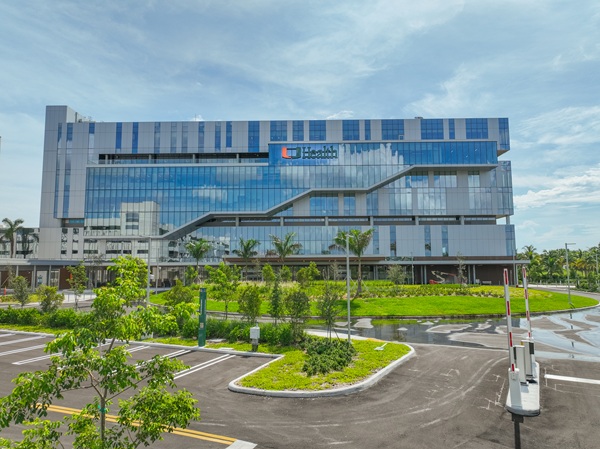
When UHealth SoLé Mia opened in September, the seven-story, 370,000 sq. ft. facility provided something to South Florida residents that they’d been needing for a very long time.
“Access—that sums it up in one word,” said Vandana Pathak, assistant vice-president, Ambulatory Operations. “It is the number one priority of the University of Miami Health System to bring healthcare closer to home.”
According to Pathak, the demand for world-class academic medicine is growing, with many patients traveling long distances to seek care. UHealth SoLé Mia is the largest ambulatory medical center that the medical system has built to date, joining UHealth Doral and The Lennar Foundation Medical Center, all of which build on the advanced specialty care delivered at UHealth’s flagship hospital in downtown Miami.
Nationally Ranked Specialty Care
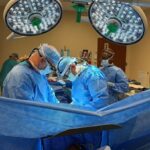
At UHealth SoLé Mia, all outpatient specialties are housed under one roof to make the patient experience more convenient. The “one-stop shop” has 110 exam rooms, 10 operating rooms, and 33 cancer infusion suites where oncology services are provided by Sylvester Comprehensive Cancer Center, South Florida’s only NCI-designated cancer center.
“Our operating rooms and interventional radiology suites are all outfitted with the latest in surgical boom technology, lights and audio/video integration, so physicians can observe cases from other campuses,” said Pathak. “Robotic surgery is available in specialties like orthopedics, urology and gynecology.”
Eye care at UHealth SoLé Mia is provided by the Bascom Palmer Eye Institute, which has consistently been ranked the number one eye hospital in the country for the past 25 years. Urology services will be provided by the Desai Sethi Urology Institute and UHealth just signed a partnership with the Hospital for Specialty Surgery to provide world-class orthopedic care.
Additional specialties include neurology and neurological surgery, cardiology, endocrinology, gastroenterology, dermatology, otolaryngology, gynecology and more.
“The facility also includes all of the clinical and ancillary services needed to support care like an imaging lab, pharmacy, physical therapy, occupational therapy and more,” said Pathak. “A patient can get their MRI and see their provider in the clinic on the same day, spending less time in their cars and more time at the dinner table with their families.”
A Place People Want to Work
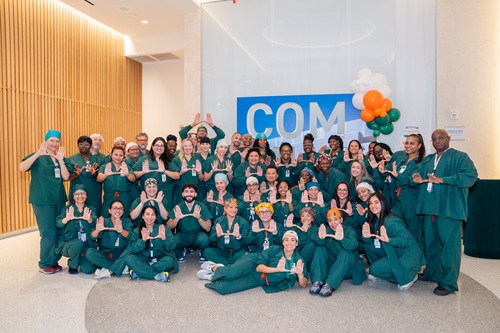
UHealth SoLé Mia was designed not only for patients and their families, but with the staff in mind as well. More than 500 staff members were involved in the design of the facility, resulting in a building that promotes efficiency and safety and makes it easier to do their jobs.
The facility has integrated artificial intelligence (AI) in every aspect of patient care, from scheduling to insurance verification to clinical visits. The center features Suki AI, which is ambient dictation that allows doctors to be more efficient when dictating notes, so that they can instead focus on the patient without the distraction of note-taking.
“Our goal with Suki AI is to reduce paperwork and physician burnout, but it also translates into an amazing patient experience,” said Pathak. “Providers spend less time notetaking and more time being present in front of patients and family members.”
AI also suggests potential diagnoses and recommended treatments based off the latest guidelines, which enhances clinical decision making. It generates after-visit summaries and reports within minutes, which insures that patients leave with a clear understanding of their care plan.
Patient-centered Design
Because many people feel anxious about going to the doctor or having a healthcare procedure performed, UHealth SoLé Mia was designed to make that experience easier by blending hospitality with healthcare.
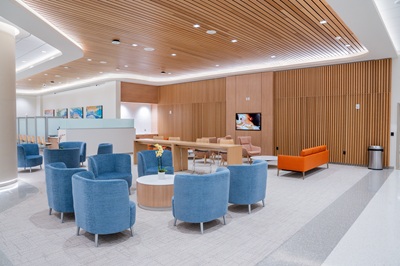
“The design was focused around creating a healing environment; every touch point in the building was made with the five senses in mind,” said Pathak, adding that research shows that patients recover more quickly and require less pain medications when they have exposure to nature and a healing environment.
The design includes floor-to-ceiling windows to bring in natural light, and a reflection garden on the fourth floor offers views of the ocean and the development’s Crystal Lagoon. Expansive lobbies and hallways are designed to enhance comfort, provide calm and optimize patient flow and efficiency.
“Curated art is a big focal point; we have an expansive, two-story digital art wall, among other pieces,” said Pathak. “We also have aromatherapy piped into the building through the HVAC system, and every day, a live piano player performs to create an uplifting experience as soon as patients walk in the door.”
Pathak adds that UHealth was also mindful of where services were placed, putting high-volume services on the first floor to make patients’ visits easier and more convenient.
“Surrounded by a vibrant residential community, the building is more than just its exterior—it’s the people inside who make it come alive,” added Pathak. “From valet staff and patient access representatives to housekeeping, nurses, and physicians, every individual was chosen for their role in creating a welcoming, caring environment. Buildings endure, but it’s people who give them soul.
“Every day we walk into this facility, we’re just thrilled to be here and to be part of this community,” said Pathak. “It’s something very special.”