Until the recent past, the nations public health departments had a somewhat limited role, focusing on activities such as giving immunizations, tracking communicable diseases and processing birth certificates. That changed dramatically in the last decade, and todays public health department is a dynamic, multifaceted organization charged with the increasingly complex tasks of disease prevention, health promotion and disaster preparedness.
Nowhere is this truer than in Miami-Dade County, the eighth largest county in the U.S. As home to one of the nations most important ports, Miami- Dade serves as an international crossroads for travel, immigration and commerce. That makes the region exceptionally vulnerable to two major threats to public welfare: terrorism, including bioterrorism, and emerging epidemic diseases. Those, however, are just two of the many public health and safety concerns addressed by the Miami-Dade County Health Department (MDCHD), based in Miami.
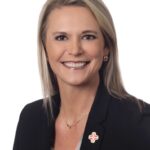
“We have had some wake up calls in recent years,” says Lillian Rivera, RN, MSN, administrator of MDCHD. “Hurricane Andrew and September 11 showed us that we needed to be more agile as an organization. We re-organized our internal operations in response to Andrew, and September 11 gave us a new role, preparedness. We are a state agency, part of the Florida Department of Health, and so we were also involved in the re-structuring that took place when that department was created in 1997. Today, our department continues to grow, developing new programs and services to meet the needs of the community. We have made tremendous strides as an organization.”
MDCHD has a $64 million budget and over 1,000 employees, including physicians, nurses, nurse practitioners, dieticians, social workers, environmental scientists, engineers, epidemiologists and others. Under Riveras leadership, the organization has been so successful in transforming itself into a model of excellence that it received the Governors Sterling Award in both 2002 and 2006. Winning twice is an unprecedented achievement and Rivera is justifiably proud of the organization and the dedicated employees who perform their jobs with excellence and a strong spirit of public service.
“The Governors Sterling Award is given for performance excellence,” she says. “Miami-Dade was the first county health department in the state, out of 67, to be recognized in this way. We have a philosophy of continuous improvement and a tight strategic planning cycle. Weve come a long way and our department works very well. The Sterling model gives you strong management skills and a way to respond to challenges and problems.”
The Florida Sterling Council is a non-profit founded in 1992 to give the state a competitive edge and a higher quality of life through the promotion of performance excellence by Florida organizations.
Rivera has a distinguished history as a clinician and administrator. She began her nursing career as a hospital staff nurse and eventually moved into nursing management. In Puerto Rico, she began what she calls “my long love affair with public health.” She served as Nursing Director with the Department of Public Health there and attended the University of Puerto Rico in San Juan, obtaining both her baccalaureate and masters degrees in nursing. She is a graduate of the Executive Institute for Community Health Nurses at UNC-Chapel Hill, a fellow of the Nurse Executive Program of the Robert Wood Johnson Foundation and the National Public Health Leadership Institute.
“To me, the appeal of public health is that we are able to have a large impact. In the hospital, we target individual patients and focus on acuity; in public health, we look at the population at large and implement interventions that affect large groups of people. We do much more preventive care and do it in a way that is systematic, sustained and effective.”
Providing for public health and safety is a 24-hour operation that provides essential health services, including the prevention of disease and promotion of community health. The department is highly diverse, with numerous divisions and sub-divisions, and adds programs and services as new needs are identified. The Health Services division offers a wide range of services, including disease control, chronic disease prevention, HIV/AIDS services, STD control and prevention, TB control and prevention, immunizations, womens and childrens health services and refugee health assessment. Community services include environmental health, poison control, public health preparedness and school health.
Forming partnerships with other organizations is an effective strategy for the department and Rivera believes that collaboration strengthens each partner and fosters superior services to the community. She spearheaded the development of the Miami-Dade Hospital Preparedness Consortium, a 22-member, interdisciplinary group that addresses hospital preparation for disaster, and the Consortium for a Healthier Miami-Dade, a 50-member alliance of organizations that is working together to promote health and prevent disease through education, screening and other activities.
MDCHD serves 2.4 million county residents and 10 million visitors per year, providing services that protect, maintain and improve public heath and safety through prevention and preparedness.
“Public health is exciting and always challenging, and every day brings a new surprise,” says Rivera. “We are always learning, from our community partners and our clients. We are concerned with the health, safety and well-being or everyone within our community residents, new arrivals, and visitors. In public health, the entire community is the client.”



 Until the recent past, the nations public health departments had a somewhat limited role, focusing on activities such as giving immunizations, tracking communicable diseases and processing birth certificates. That changed dramatically in the last decade, and todays public health department is a dynamic, multifaceted organization charged with the increasingly complex tasks of disease prevention, health promotion and disaster preparedness.