By Lois Thomson
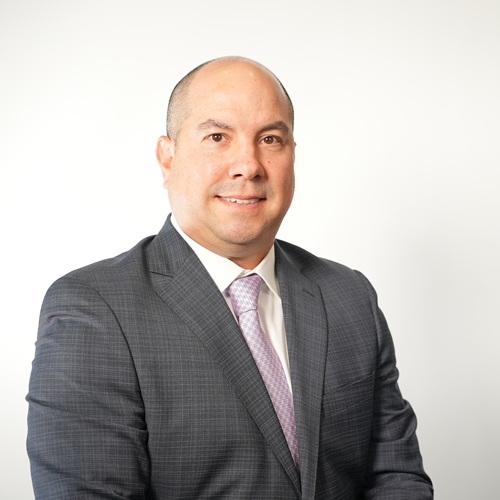
“I have always wanted to be a physician, but over time, doctors have had to become business-oriented to survive.” With that realization, Dr. Raul Couret decided to earn his Executive Master of Health Administration (MHA) from Florida Atlantic University. He continued, “As physicians, we don’t just use our stethoscopes today, we probably use our mouse more than a stethoscope because there’s so much documentation, so much that goes into what we do.”
Couret is the managing partner of Cumberland Family Practice in Hendersonville, TN. The practice provides full-service family medicine, but Couret focuses mostly on geriatrics; he said he was recruited by the physician who previously ran the practice, and who was looking for a junior partner with experience in geriatric work and Couret’s level of capability. In addition to his private clinic at Cumberland, Couret is the medical director of two long-term care facilities and a hospice agency.
Despite currently living in Nashville with his wife of 20 years and two teenage children, Couret chose to get his MHA from FAU: “I was born in Chicago but was raised and grew up in Miami, in the Hialeah–Miami Lakes area. I actually went to Florida Atlantic back in 1996 and got my degree in chemistry.” He said Nashville has some great programs, “but FAU has an amazing executive program. It is incredible for me to think that I returned to my alma mater almost 30 years later, and the school’s reputation was what led me to realize it was a good choice. And the fact that it was online suited my schedule; I could do it on weekends or at night.”
Couret said Cumberland Family Practice is a private practice entity, owned by the four physicians who run it, and he felt the MHA, which he earned in December 2024, would be beneficial. He said many of the classes were instrumental to what he does on a daily basis, and pointed out that the human resources class was particularly key to what he does in running his own business.
“I currently manage a staff of 21 employees, and there are three other doctors. Most of what we do, we have to do on our own. We don’t have someone who handles HR – we are the HR department.”
He mentioned that the Healthcare Law and Introduction to Healthcare classes “were both amazing.” He said so much goes into healthcare law, from malpractice, to tort reform, to changes in regulations, and the class was very helpful; and the Introduction to Healthcare class “is what healthcare is really all about.” Couret pointed out that not everybody in the MHA program had healthcare experience. “The amazing part for me was that so many people weren’t really providers like myself – they might have a degree in business or accounting or social work, but wanted to get into the healthcare field. A lot of folks are in leadership roles but are not a provider – some may be in entry-level positions, while others are close to achieving the C suite.”
Additionally, Couret talked about a Boot Camp class, in which experts in the healthcare field are invited to give lectures on different aspects of current healthcare management. “It also forces you to increase your network and it helped me work with other colleagues in different leadership roles. I learned a lot about what they do.”
He said that in the past few years, he realized that if he was dealing with someone in the business world, that person wasn’t necessarily a physician or nurse or therapist. “I realized we don’t receive enough training in this area, and I wanted to better understand the business side of healthcare. That was one of the biggest challenges – how do I expand my horizons on healthcare leadership, and this program opened the doors for that.”
Of his practice, Couret says, “I am a geriatrician at heart. I am the son of Cuban immigrants who was always there for my grandparents at doctors’ appointments.” He said his grandparents were the ones who babysat him when his parents worked. Because he was bilingual and bi-cultural, he was able to help read prescription labels, interpret for them at the doctor’s office, etc. “That led me to want to go into geriatrics. Most of my patients are in their 70s and 80s, so time is not on their side. If I can expand their quality of life, it is very fruitful. What I love most is my hospice team and my palliative patients, as I feel there is nothing more meaningful than giving somebody dignity at the end of life.”
Looking to advance your healthcare career? Learn more about the Executive Master of Health Administration program at Florida Atlantic University by visiting: https://business.fau.edu/masters-phd/mha/”