

By Adriana Bonansea-Frances, MD
As we move past the midpoint of the 2026 Florida Legislative Session in Florida, healthcare remains at the center of policy debates shaping our profession and our patients’ lives. From scope-of-practice proposals and reimbursement reforms to prior authorization requirements and workforce development initiatives, lawmakers are considering bills that will influence how care is delivered across our state for years to come.
Amid these complex and often technical discussions, an issue has emerged that may seem, at first glance, semantic, but is in fact profoundly ethical: what we call ourselves.
A recently published policy paper in the American College of Physicians’ Annals of Internal Medicine, titled “Physicians Are Not Providers: The Ethical Significance of Names in Health Care”, urges the medical community and policymakers alike to reconsider the widespread use of the term “provider” to describe physicians. The paper argues that language is not neutral. Words shape identity, influence public perception, and can either strengthen or erode the ethical foundations of our profession.
For decades, physicians have witnessed the steady corporatization and commercialization of healthcare. As employment models have shifted and the “medical-industrial complex” has expanded, many of us have felt an erosion of professional autonomy or what some have termed “deprofessionalization.” The adoption of the term “provider” is not separate from this trend; it is a symptom of it.
The word “provider” originated in federal statutes such as Medicare and Medicaid in 1965, referring broadly to “any provider of services.” Over time, it has come to encompass hospitals, insurers, and individual clinicians alike. But in doing so, it blurs critical distinctions. It equates the physician ‒whose years of rigorous training, ethical obligations, and fiduciary duties are unique‒ with institutions and commercial entities whose primary drivers may not always align with patient-centered values.
Medicine is not a commodity, and the patient-physician relationship is not a transaction.
The ACP paper reminds us that the word “patient” derives from the Latin patiens, one who suffers. “Physician” and “doctor” are rooted in traditions of teaching, healing, and service. These words reflect a relationship grounded in trust, compassion, and ethical responsibility. A physician is bound by duties of beneficence, nonmaleficence, respect for autonomy, and justice. We are accountable not to shareholders, but to the public and to the patients who entrust us with their most vulnerable moments.
When physicians are labeled as “providers,” we risk diminishing that covenant. The term suggests a commercial exchange rather than a moral commitment. It obscures differences in training and expertise among members of the healthcare team and may confuse patients who deserve transparency about who is caring for them. Perhaps most concerning, language influences self-perception. When we internalize transactional terminology, we may gradually accept a model of care that prioritizes productivity metrics over professional judgment.
During this Legislative Session, as bills are debated and amended, we must remember that policy and language are intertwined. How statutes define us matters. How contracts describe us matters. How we describe ourselves matters.
At the Miami-Dade County Medical Association, we believe that advocacy is not only about reimbursement rates or regulatory reform, but also about preserving the integrity of our profession. We must ensure that legislation reflects respect for the physician’s role and protects the ethical framework that underpins patient care.
Now more than ever, physicians must be engaged. A united voice carries weight in Tallahassee and here at home in Miami-Dade County. I encourage every physician who is not yet a member to join the Miami-Dade County Medical Association. Through collective advocacy, we can defend our professional identity, safeguard our patients, and reaffirm that we are not merely providers, we are physicians.
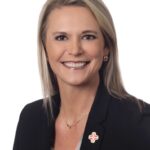
Dr. Adriana Bonansea-Frances is President, Miami-Dade County Medical Association.