By Vanessa Orr
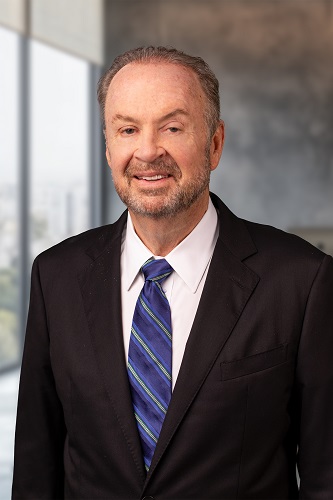
South Floridians and the rest of the nation will see major changes to healthcare as the result of the Big, Beautiful Bill Act, otherwise known as H.R. 1. The bill will not only affect Medicare and Medicaid, but the ability of certain areas of the country to provide the care patients need. South Florida Hospital News & Report sat down with Wayne Brackin, President & CEO of KIDZ Medical Services and longtime South Florida Healthcare executive, to talk about what changes our area can expect to see now and in the future.
Q: What does the passage of H.R. 1 mean to Medicare and Medicaid in Florida?
WB: I think most people in the state of Florida do not realize how dependent a large percentage of our population is on Medicare and Medicaid services. If you’re insured through your employer, like most of your readers, Medicaid problems seem like a distant concept, and many are surprised to learn that as many as 25 percent of Floridians are dependent on Medicaid for their healthcare. In some categories, like Ob/Gyn and Pediatrics, the percentage is closer to 45 percent, which is nearly double.
Q: How many people will this affect?
WB: If the data and projections are correct, we could lose as much as 20 percent of the budget that the state receives for Medicaid funding. That turns into approximately $4 billion in cuts over that period of time, which will negatively impact 1 million residents.
Being a Medicaid recipient is not a desirable luxury. When you’re sick, you’re sick, and you need care. People won’t stop becoming ill because they don’t have Medicaid. What they will likely do is delay care because they don’t have the ability to pay, and they’ll end up in the ER, which is the most expensive option.
The bill is also supposed to control costs by cutting dollars out of the Medicare and Medicaid budget by dropping people and making it more difficult to re-enroll by requiring it twice a year. This is why hospitals frequently offer enrollment resources—to help patients qualify or requalify for benefits. But those costs will only be redistributed elsewhere; they don’t disappear.
Q: When will these changes take place?
WB: The cuts will roll out over time, which will make it more difficult to measure the impact. I don’t believe that the first cuts are planned to hit until after the next round of midterm elections, which may or may not be by design. It will be another year or so until people start to feel it.
As hospitals and physician groups plan for the future, they will be faced with trying to plan around what is likely to be reduced funding across the board, which will end up restricting access one way or another.
Q: What are people who are dropped from Medicaid supposed to do for care?
WB: There are some free clinics that are sponsored by well-intended non-profit and religious organizations, but unfortunately, there are not nearly enough of them. Federally qualified health centers are significant providers of care to the underserved and those are heavily dependent on Medicaid dollars as well.
Everybody knows the provider of last resort is the hospital emergency room, which has both a moral and legal obligation to take care of people who come in, irrespective of their ability to pay. Small and rural critical access hospitals, which already operate on zero or negative margins, are also dependent on Medicaid, so we could see the closure of some of those facilities that will exacerbate the problem even further.
Q: Is anything being done to circumvent this loss of care?
WB: I expect that Florida’s politicians—from both parties—are going to come under extreme duress as their constituents get dropped from Medicaid. The state will probably attempt to restore some of missing funding from other sources—particularly to these rural providers. But where that money is coming from isn’t known yet. Another key point to consider is that small and rural hospitals are often the major employers in the community, and that will cause a significant economic impact.
Q: Speaking of closings, in July, Jackson South announced that it was closing its maternity services. How will this affect the South Florida community?
WB: That announcement was a surprise to me and to many in the community as well. I am very reluctant to be critical of Jackson Health in any way, because they have one of the most difficult jobs in the U.S. As one of the largest public hospitals in the nation, they are a safety net for this community, which is an enormous responsibility and obligation.
There are multiple factors that might have led to this decision, such as the availability of obstetricians, patient preference, and others. The population in south Miami-Dade is growing and getting younger. We’ve certainly seen the demand with the MOMZ Ob/Gyn practice we opened in Homestead in 2023. It’s relatively new but already has a waiting list to see its three obstetricians.
Fortunately, there are multiple, very high-quality labor and delivery programs at Homestead Hospital, Baptist Hospital, South Miami Hospital, HCA Kendall, and HCA Mercy, but demand is increasing on them as well. There are more than 20 miles between Jackson South and Homestead Hospital—that’s a big expanse of county to have only one hospital in the south end delivering babies.