The Barry University School of Nursing addresses the national shortage of nurses by preparing nurse educators
For two years, Carol Savanello says, she prayed that nothing would happen to her mother. Thats how long it took the registered nurse to earn her bachelors degree in nursing through the RN to BSN program at Barry University and she wanted to share her accomplishment with her mother by having her mother pin her at the traditional ceremony that serves as a rite of passage for nurses. “This was between me and mom,” Savanello explains. A graduate of a nursing diploma program in Chattanooga, Tennessee in 1949, Jean Ragan inspired her daughter to become a nurse too. After serving as a labor and delivery nurse for 25 years, first at North Shore Medical Center then at Baptist Hospital, Savanello decided to pursue the bachelors degree her mother never had. “She also wanted to go back to school, but with kids, she never did,” says Savanello. Last May, the 46-year-old college graduate watched Ragan lean on her cane as classmates and professors helped her mother cross the stage to pin her. She remembered what her mother had always told her: Youre never too old to learn.
Jean Ragan (mother) and Carol Savanello
Savanello and her mother share an experience common among nurses. “Nursing is still mainly a womens profession,” observes Dr. Sandra Walsh, a faculty member in the doctoral program at Barrys School of Nursing. “A lot of women go back to school later in life because theyre balancing their careers and their families.” Walsh earned her bachelors in nursing from Duke University in 1960, but did not pursue her masters and doctorate until nearly 30 years later, when she was 50 years old. Now 68, the professor sees her role as preparing the next generation of nursing educators. She is only half joking when she says, “Im just trying to hang on long enough to get people to replace me.”
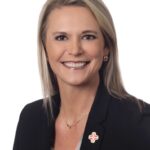
Dr Pegge Bell (left), Dean of BUs School of Nursing, and Kim Greene, Executive Director of John T. Macdonald Foundation
Like so many nursing faculty across the country, Dr. Walsh is talented, dedicated, and almost ready to retire. The median age of nursing faculty at all ranks is 48.8 years. “Within the next 10 years, many of the current faculty are expected to retire,” says Dr. Pegge Bell, dean of the Barry University School of Nursing. “Yet the pipeline of new nursing faculty is small.” A shortage of faculty contributes to the shortage of nurses nationwide. The American Hospital Association reported recently that more than 32,000 qualified applicants were denied admission to nursing schools, primarily because there were not enough professors to teach them. There are currently more than 600 open faculty positions at U.S. nursing schools a vacancy rate of about 8.6 percent. Determined to change that, Dean Bell says, “At Barry, we have targeted our scholarships and grants towards producing nursing faculty for the future.”
Dr Jesse Collin
Grants to the University from the John T. MacDonald Foundation, the North Dade Medical Foundation, and Blue Cross and Blue Shield of Florida The Community Foundation further the mission to educate future leaders. Barry also is one of three nursing schools that received a SUCCEED grant from the Florida Department of Education to fund a pipeline for students from associate and baccalaureate degree programs into graduate programs and to encourage students to become tomorrows faculty. The SUCCEED grant helps get the word out that faculty salaries are now more competitive with hospital salaries, with flexible schedules that leave time to publish articles, conduct research, and attend professional conferences.
Promoting doctoral study does more than fill vacant teaching positions. Dr. Walsh, who won the highest honors for teaching excellence at Barry University this year, encourages her students to think of themselves not only as teachers, but as scientists. “Doctoral students are generating a new body of scientific knowledge,” she says. “Were looking at how to take care of people from the broadest of viewpoints and to help people promote their own health.”
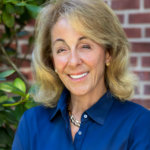
Dr Sandra Walsh
Scientific research has direct applications for nursing practice, according to Dr. Jessie Colin a member of Barrys doctoral faculty as well as an appointee to the Florida Board of Nursing and a cofounder of the Haitian Health Foundation. By conducting research on issues such as women and HIV, depression, and health advocacy, her students help find better ways to provide care. “The way to make the practice better,” says Colin, “is through research.” As scientists and teachers sharing research with their students, nursing faculty will set the course for the future of the profession.