
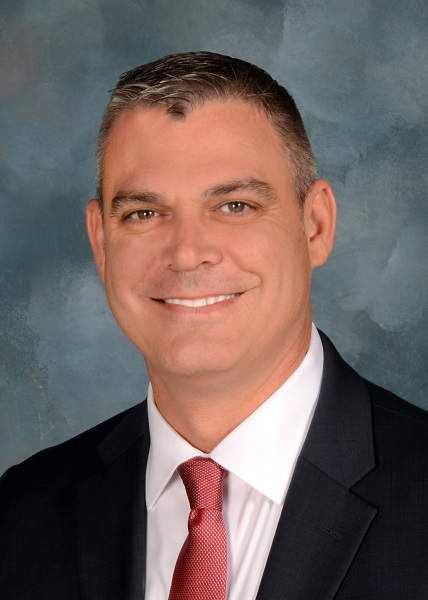


By Daniel Casciato
As Executive Director of Nursing and Patient Experience at Holy Cross Health, Paul W. McGourty brings a rare dual perspective to healthcare leadership—one rooted in both clinical care and the principles of world-class service. With a background in hospitality, including experience with Ritz-Carlton and Marriott, McGourty brings to nursing administration a deep commitment to compassion, connection, and excellence.
“My passion has always been in patient experience,” says McGourty. “Service was always a passion for me. Nursing is a very easy transition because of the caring aspect. I don’t think they intersect; rather, they work in tandem and move in parallel.”
Bridging Service and Care
McGourty’s approach to aligning patient experience with nursing practice centers around culture. He believes that meaningful improvement begins with putting employees first.
“The strategies I find most effective are those where we put our colleagues first,” he says. “Making sure they’re connected to the mission of the organization and that they know what their ‘why’ is, is where we find success.”
This culture-first strategy translates to measurable success in patient satisfaction, staff engagement, and care outcomes. “Culture will eat strategy for breakfast every day,” McGourty notes. “The more we spend working with our frontline colleagues, the better we drive success.”
Faith-Based and Patient-Centered
At Holy Cross Health, patient-centered care is deeply aligned with the organization’s faith-based mission. McGourty explains that care delivery is guided by both the spirit of the Gospel and the Jean Watson Caritas principles.
“Patient-centered care here really is our mission to serve in the spirit of the gospel,” he says. “We treat others the way we would want to be treated. We embrace the Jean Watson theory of human care, guiding nurses toward compassionate and holistic care.”
This patient-first philosophy influences how nursing teams interact with patients and each other, creating a system of care that honors body, mind, and spirit.
Meeting the Moment: Challenges in Nursing Leadership
McGourty is candid about the challenges facing nurse leaders in today’s evolving healthcare landscape. From a changing workforce to rising patient expectations, the pressures are complex and ever-shifting.
“We’ve seen a major shift in the nursing workforce with many seasoned nurses choosing retirement or roles away from the bedside,” he says. “At the same time, healthcare remains highly regulated and often slower to adapt, which can be at odds with patients who now come with very high expectations.”
The rise of consumerism in healthcare has shifted the patient mindset. McGourty acknowledges that many patients are making significant out-of-pocket investments in their care and expect a service level to match. “There’s an element of having to spend a lot of money in a place that maybe wasn’t budgeted for, and that can be very challenging.”
Listening to Patients, Leading with Data
At the heart of McGourty’s strategy is a robust system for collecting and acting on patient feedback. Holy Cross surveys 100% of patients across the entire continuum of care, combining regulatory CMS surveys with real-time digital feedback.
“We’re able to obtain almost real-time feedback from them,” he explains. “If someone rates us poorly, they can provide open-ended feedback explaining why. Leaders read those comments on a daily basis and make changes.”
A closed-loop service recovery program adds another layer of responsiveness. If a patient leaves a low rating and agrees to be contacted, a department leader follows up personally. “Nine out of ten times, they’re able to resolve what that person’s concerns were, which creates more loyalty to Holy Cross and proves to our patients that we care and that we’re listening.”
The Power of Mentorship
For McGourty, mentorship is not only a responsibility but a privilege. Having benefited from strong mentors himself, he now pays it forward through both formal and informal mentorship programs.
“Mentorship is everything. Helping people embrace lifelong education and navigate different pathways for success is extremely rewarding,” he says. “It helps the next generation feel empowered to ask questions and seek clarity.”
At Holy Cross, mentorship is deeply ingrained in the culture, fostering curiosity, professional development, and personal growth among all levels of the nursing staff.
Courageous Leadership in Critical Moments
McGourty recalls the early days of COVID-19 as a defining chapter in compassionate leadership. As hospitals across the country restricted visitation, he and his team recognized the emotional toll on patients and families.
“We were really trying to adhere to infection control standards and keep our colleagues safe, but we also saw that we were isolating patients,” he recalls. “Early on—perhaps before it was widely accepted—we began finding safe ways to reunite loved ones, particularly those at the end of life. It was just the right thing to do.”
This kind of values-driven decision-making, he says, underscores the role of nursing leadership in advocating for patient dignity, even in the face of unprecedented challenges.
Looking Ahead: Innovation and Human Connection
When asked about the future of nursing and patient experience, McGourty is energized by emerging models of care that combine innovation with empathy. Holy Cross has already introduced team-based care supported by virtual nurses—experienced clinicians who offer remote oversight and guidance, allowing the on-site team to focus fully on bedside care.
Artificial intelligence also shows promise in improving patient outcomes through predictive biofeedback and early interventions. McGourty sees potential for AI to streamline access, reduce friction, and make it easier for patients to navigate healthcare systems.
“We’re going to see a lot of innovation, particularly with AI, that will increase access and streamline our processes. Ultimately, it will help us deliver on our brand promise—to make it easier for patients to access and utilize healthcare.”
Through every change, McGourty remains committed to the human side of healthcare. “Nursing is rooted in care, compassion, and presence. Technology should serve to enhance—not replace—those values.”
His leadership philosophy reflects that balance—a blend of strategy and heart, vision and service—anchored in the belief that every patient interaction is an opportunity to heal, to listen, and to lead.
Paul McGourty, RN, MHA, received his Master of Health Administration through Florida Atlantic’s College of Business – Executive Education in 2020. To learn more about leadership in healthcare or explore FAU’s Executive Master of Health Administration program, visit emha.fau.edu. You may also contact the Admissions team via email at ExecMHA@fau.edu or on (561) 297-6000, referencing this month’s August edition of the South Florida Hospital News & Healthcare Report.























