.jpg) With nationally ranked clinical programs and a growing number of research grants, UHealth – the University of Miami Health System and the University of Miami Miller School of Medicine made important contributions to the field of medicine in 2018.
With nationally ranked clinical programs and a growing number of research grants, UHealth – the University of Miami Health System and the University of Miami Miller School of Medicine made important contributions to the field of medicine in 2018.
UHealth continues to be a magnet for top talent from around the world with CEO Edward Abraham, M.D., who is also executive vice president for health affairs, announcing several executive appointments. Henri R. Ford, M.D., MHA, became dean and chief academic officer of the Miller School of Medicine. Mary Beth Briscoe, CPA, MBA, was named CFO for UHealth and the Miller School, and Maureen Fagan, DNP, was appointed chief experience officer.
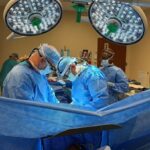
As the region’s only academic medical center, UHealth led significant advancements in innovative patient care. Ophthalmologists at Bascom Palmer Eye Institute performed one of the first gene therapy surgeries to treat a child with a blinding vision disease, using Luxterna, the first ocular gene therapy drug approved by the FDA. U.S. News & World Report also ranked Bascom Palmer #1 in the nation for ophthalmology for the 17th time and the 15th year in a row.
In October the University of Miami announced the formation of the UHealth Board of Directors, a panel of highly respected leaders in health care and business who will provide strategic oversight to the University of Miami Health System. As health care evolves rapidly, health care systems must operate in an environment of thoughtful decision making that is nimble and adaptive to the market. This board creates a critical framework to help UHealth provide superior care to patients, improve population health, advance medical discoveries, and educate the next generation of health care leaders.
A consortium led by the Miller School received a $60 million grant from the National Institutes of Health to help build the most inclusive and diverse health database in history. Thanks to UM’s expertise in genetics and genomics and its location in one of the most ethnically diverse counties in the nation, UM is the lead partner in the SouthEast Enrollment Center, which plans to enroll about 100,000 participants in NIH’s nationwide “All of Us” Research Program.
“There has never been an effort like this before,” said Stephan Züchner, M.D., Ph.D., the SEEC’s lead principal investigator, who chairs UM’s Dr. John T. Macdonald Foundation Department of Human Genetics. “Right now, medicine is practiced in very broad strokes. Most people with high blood pressure get exactly the same drug, based solely on their blood pressure. This study will begin to collect the data that will enable us to begin fine-tuning the therapies for specific health issues and specific populations.”
The “All of Us” grant was one of many research awards received by the Miller School of Medicine. Fourteen departments were ranked in the top 50 in NIH funding for fiscal year 2017.
Sylvester Comprehensive Cancer Center at the Miller School of Medicine gained international recognition in clinical research. Studies led by two of Sylvester’s leading oncologists were selected among the top abstracts presented during plenary sessions at major conferences (ASCO and ASTRO). Their practice-changing findings had a significant impact on treatment strategies for lung cancer and prostate cancer. Sylvester also maintained its status as the only state-designated Cancer Center of Excellence in South Florida.
The University’s Clinical and Translational Science Institute received a five-year, $21.5 million NIH grant to fund collaborative research that speeds the discovery of new medical treatments and cures. “Creating interdisciplinary research connections across the university is a critical part of the university’s roadmap,” said UM Provost Jeffrey L. Duerk, Ph.D. “The award reflects our national leadership in interdisciplinary team science.”